
France
Bullion gold coin
United Kingdom





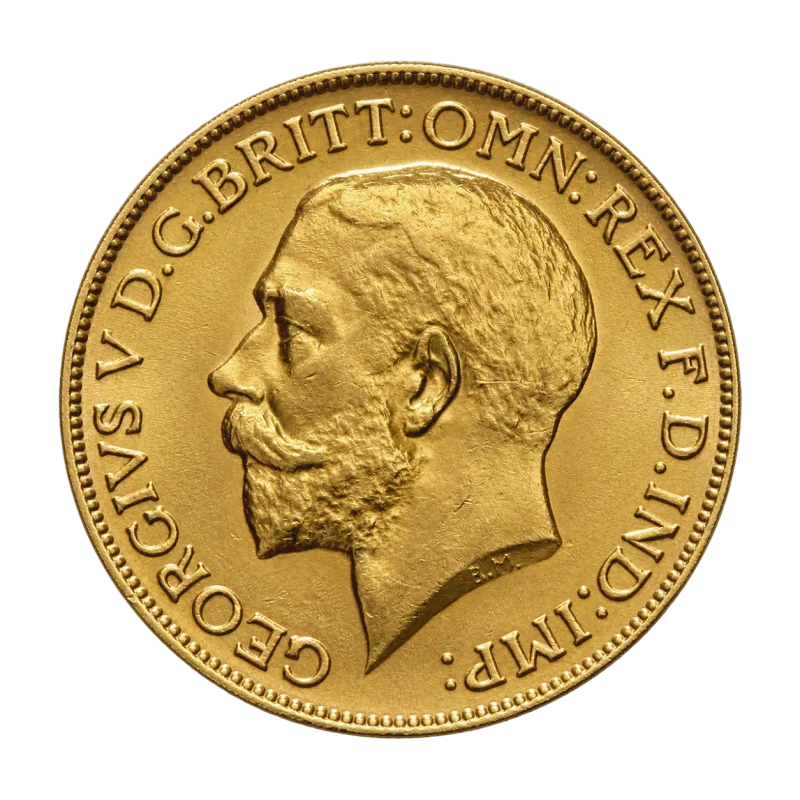
The Gold Sovereign is a British coin whose modern version has been minted since 1817. Over successive reigns, its obverse has featured portraits of different monarchs, while its reverse is particularly well known for the depiction of Saint George slaying the dragon, designed by Benedetto Pistrucci. However, this iconic design does not appear on every issue. The 1912 example featured here bears the portrait of King George V. With its long history and established place in the gold market, the Sovereign remains a benchmark among investment gold coins today.
The major British monetary reform of 1816 paved the way for the introduction of the modern Gold Sovereign in 1817, with a face value of one pound sterling, equivalent to twenty shillings. This new coin formed part of the reorganisation of the British monetary system around gold. It revived the name of a coin first introduced under Henry VII in 1489, but differed from it in size, specifications and its role within the monetary system.
During the 19th century, the Sovereign became one of Britain’s principal gold coins. Its face value and gold content were defined by the monetary regulations of the time. It therefore played an important role in the operation of the gold standard, which linked currency to a specified quantity of gold.
The Sovereign gradually spread beyond the borders of the United Kingdom. It was used and recognised in various parts of the British Empire and in several international markets. Over successive reigns, its obverse featured portraits of British monarchs, reflecting the political and artistic developments of their times.
The First World War marked a turning point in its history: gold gradually disappeared from everyday monetary circulation in the United Kingdom. Nevertheless, the Sovereign retained a role in transactions and gold reserves before further issues were produced, notably for investors and collectors. The 1912 example featured here dates from its period of circulation under the reign of George V.
The obverse of the Gold Sovereign traditionally features the portrait of the reigning British monarch, accompanied by an inscription stating their titles. Portraits and inscriptions have changed over successive reigns, and sometimes even within the same reign. The 1912 example featured here bears the portrait of George V. These details help identify the monarch depicted and distinguish between different issues.
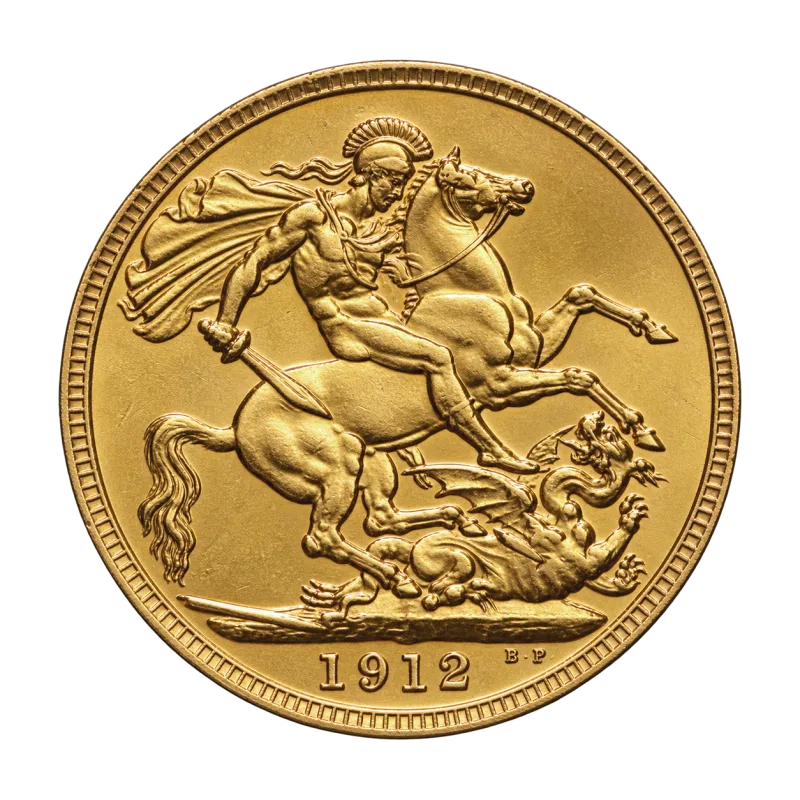
The Sovereign’s most famous reverse depicts Saint George slaying the dragon, based on a design by the Italian engraver Benedetto Pistrucci, introduced when the modern Sovereign was created in 1817. The saint is shown on horseback confronting the dragon in a dynamic scene that has become one of the most recognisable designs in British numismatics.
This depiction draws on a long-standing iconographic tradition in which Saint George embodies courage and the triumph of good over evil. Pistrucci’s composition is distinguished by the movement of the rider, the stance of the horse and the treatment of the figures. Influenced by Neoclassicism, its style gives the scene a distinctive visual identity that has endured across several generations of Sovereigns.
Pistrucci’s design was not used on every issue. During Queen Victoria’s reign, some Sovereigns notably featured a reverse with a crowned shield bearing the royal coat of arms. These variations demonstrate that the Sovereign’s artistic history extends beyond a single design. The 1912 George V example featured on this page, by contrast, bears the famous depiction of Saint George slaying the dragon.
Production of the modern Sovereign began at the Royal Mint in London in 1817. As gold production expanded across the British Empire, other mints were gradually entrusted with manufacturing the coin. In Australia, the Sydney, Melbourne and Perth mints were among those involved in its production, sometimes operating during overlapping periods. This arrangement helped meet the monetary needs of different territories while maintaining the Sovereign’s official specifications.
The Sovereign circulated as a gold coin in the United Kingdom and several territories of the British Empire. Its gold content and widespread recognition also encouraged its use in certain international transactions. However, its circulation varied between countries and periods: its international reputation should not be confused with uniform everyday use in every region where it was known.
The First World War marked a turning point: in the United Kingdom, gold coins were gradually withdrawn from everyday transactions. However, Sovereign production did not cease immediately, as some mints continued to strike coins for other purposes. Over the following decades, its monetary role changed considerably, against a background that included Britain’s abandonment of the gold standard in 1931.
In 1957, the Royal Mint resumed striking Sovereigns to meet demand in the gold market, rather than to restore their circulation as everyday currency. These investment issues, generally described as bullion coins, differ from earlier circulation strikes and collector editions. The Sovereign thus retained its historical identity while serving new purposes.
The modern Sovereign has well-established reference specifications: a weight of approximately 7.988 g, a fineness of 916.7‰ (22 carats), corresponding to around 7.322 g of fine gold, and a diameter of approximately 22.05 mm. These figures help assess whether a coin is consistent with the expected format. However, a coin that has circulated may show a slight loss of weight due to wear. These measurements are therefore useful indicators, but cannot establish authenticity on their own.
Identifying a particular issue involves several complementary features: the monarch’s portrait, the inscription, the date and the reverse design. Some examples also bear a mintmark, indicating where they were struck. These details must be considered together, as not all issues have the same characteristics or markings. The 1912 George V example photographed here illustrates one of the many variations within the series.
The Half Sovereign shares some of the Full Sovereign’s design features but is smaller: it weighs approximately 3.994 g and measures around 19.3 mm in diameter. It contains approximately 3.661 g of fine gold, half the amount found in a Full Sovereign.
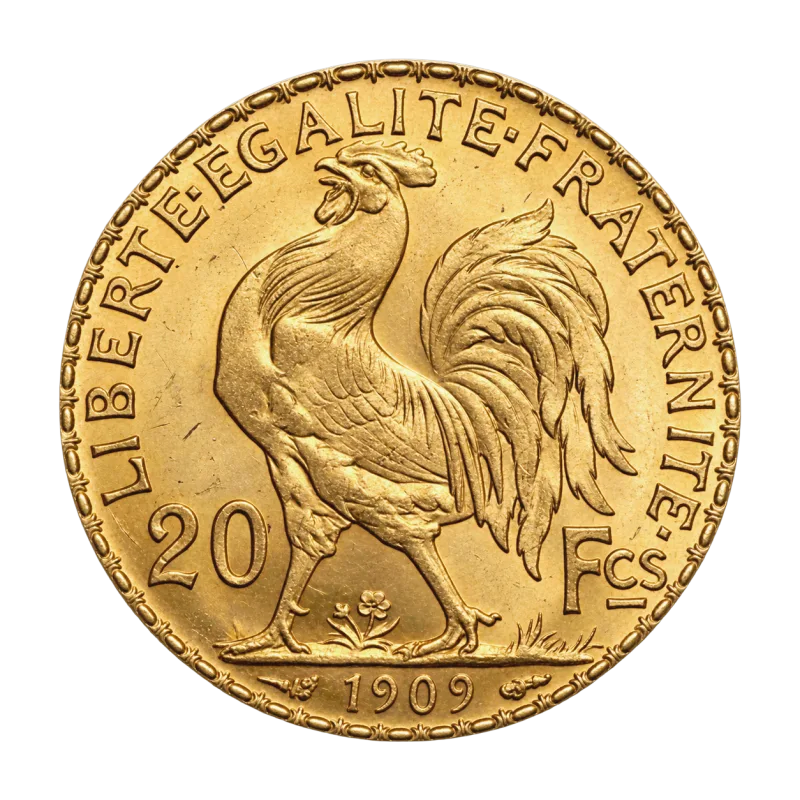
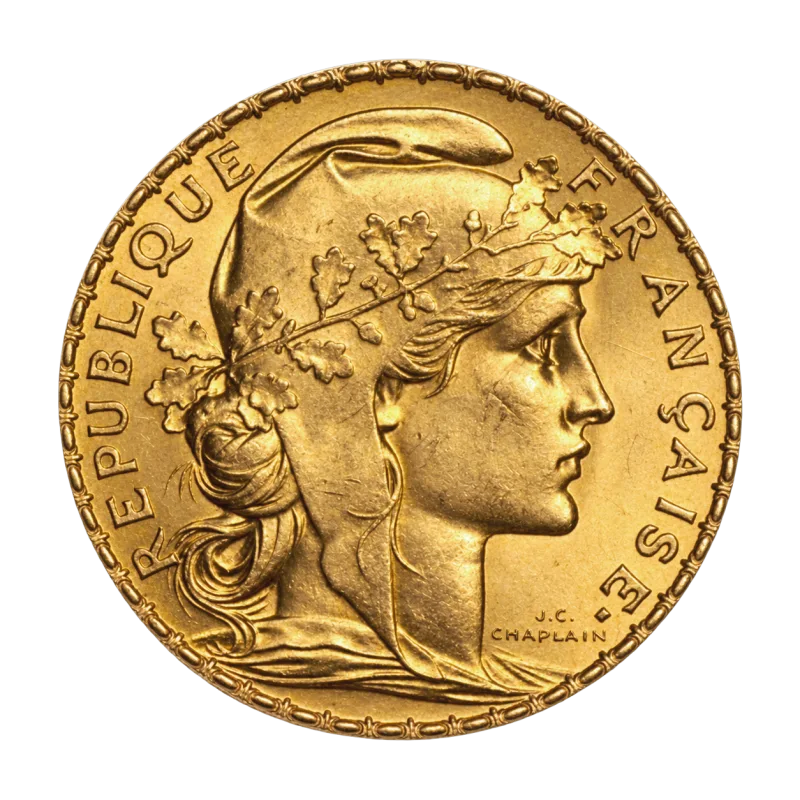
The Sovereign also differs from French 20-franc gold coins, such as the 20 Francs Marianne Rooster and the 20 Francs Napoleon III, in its fineness: 916.7‰ compared with 900‰ for the French coins. This difference in the proportion of gold within the alloy should not be confused with the total quantity of fine gold contained in each coin. Weight, diameter and minting details must be considered together, as a simple dimensional check cannot guarantee authenticity.
A Full Sovereign contains approximately 7.322 g of fine gold. This quantity can be used to estimate its intrinsic value by multiplying it by the market price per gram of fine gold at the relevant time. This theoretical value changes with the gold market and should not be confused with the price actually offered when buying or selling.
The price of a Sovereign may differ from its intrinsic gold value alone. It depends notably on supply and demand, state of preservation, coin availability and market conditions. These factors can affect its market value, which varies over time and according to the characteristics of each individual coin.
The price at which a professional dealer offers to sell a Sovereign may also differ from the amount offered to buy it back. This difference depends notably on transaction conditions and the practices of individual dealers. A quoted price therefore provides a market reference rather than a guaranteed price for every transaction.
Many Sovereigns are sought primarily for their gold content. However, certain dates, mints or varieties may have particular numismatic interest, notably because of their rarity and state of preservation. Such interest does not automatically apply to every historical issue, nor is it necessarily absent from modern strikes. The 1912 George V example featured on this page illustrates a historical Sovereign issue without implying any particular value for the coin photographed. The authenticity, rarity and condition of each example must be assessed individually.
Explore the collection
Other coins, other eras, one shared history of gold.
France
France
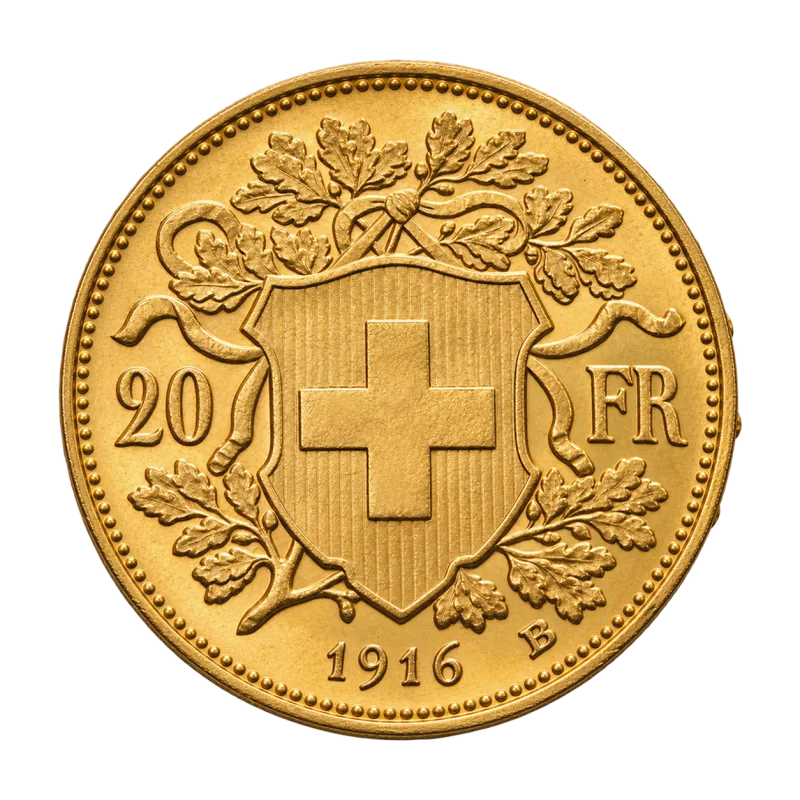
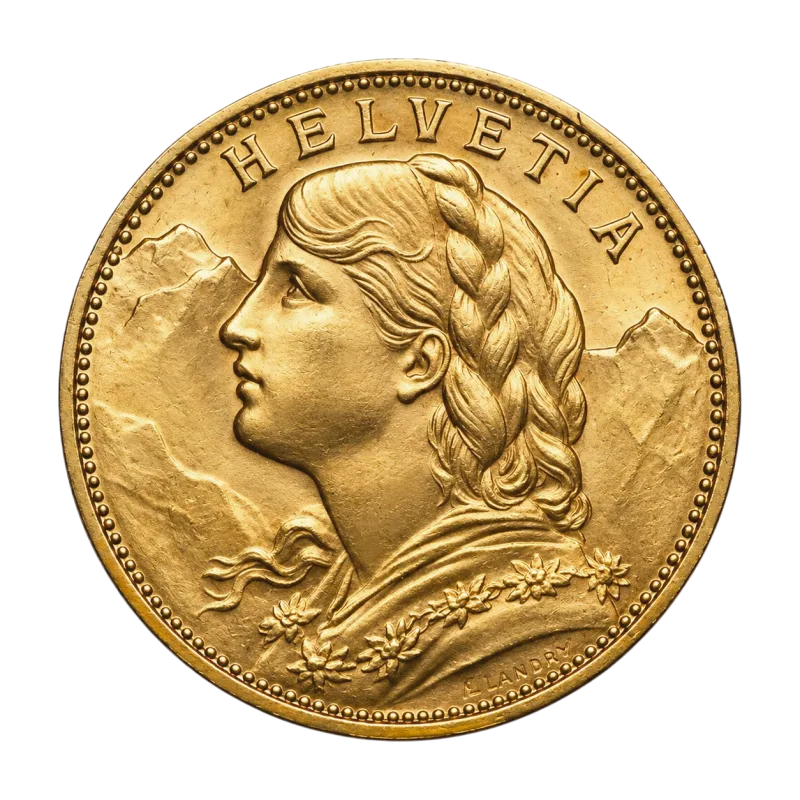
Switzerland
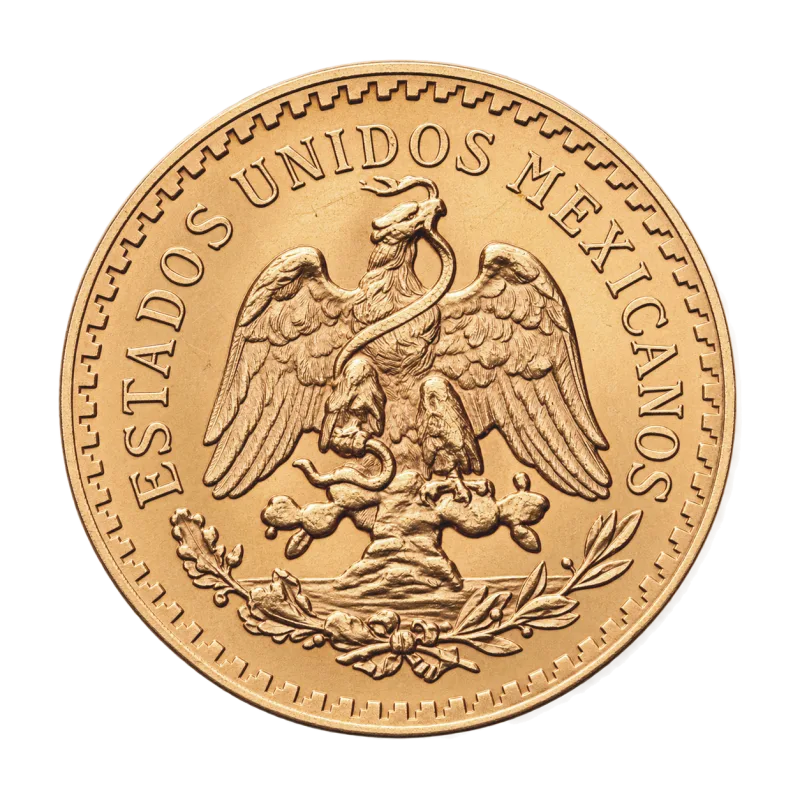
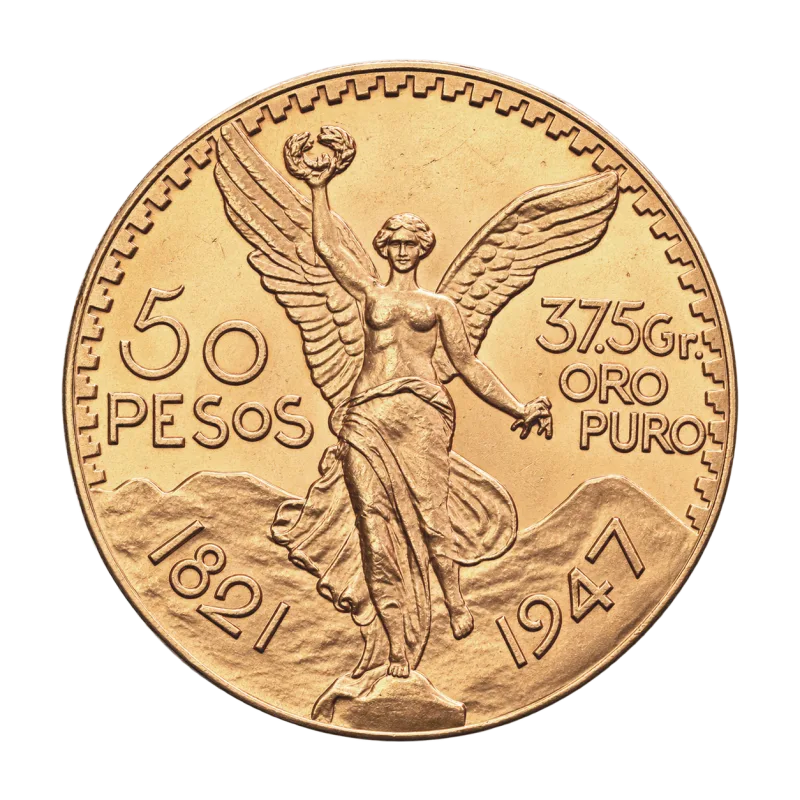
Mexico
United States
Germany
South Africa
United States
Discover all the gold coins in our numismatic collection.