

Switzerland
Bullion gold coin
United States





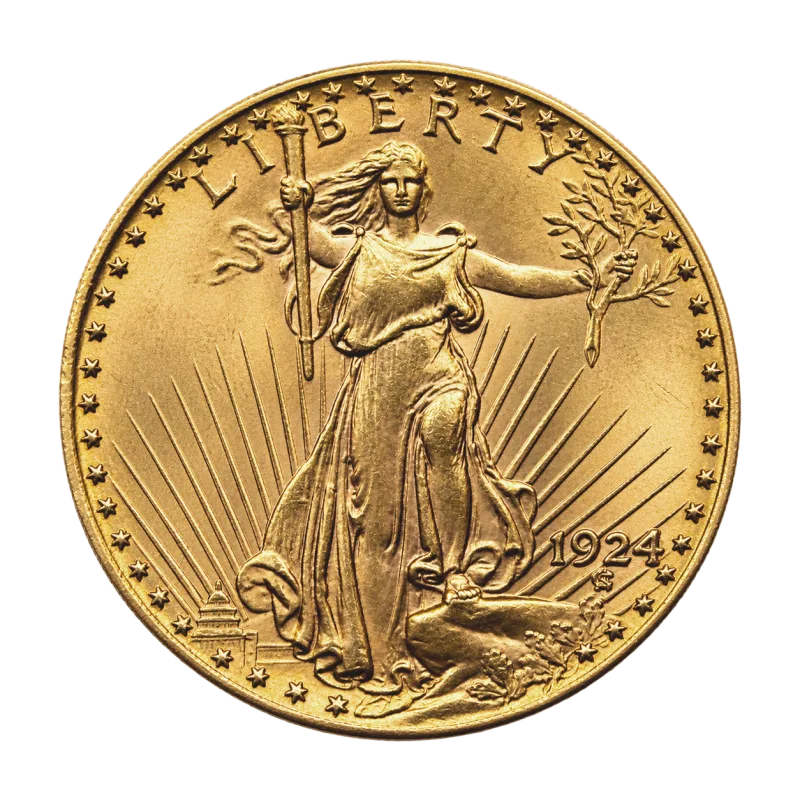
The US $20 gold coin, also known as the Double Eagle, is an American gold coin with a face value twice that of the $10 Eagle. The example featured on this page belongs to the type designed by sculptor Augustus Saint-Gaudens, issued between 1907 and 1933, and bears the date 1924. Recognisable by its depiction of Liberty striding forward, holding a torch and an olive branch, the coin weighs 33.436 grams and contains approximately 30.09 grams of fine gold, with a fineness of 900‰. Its design reflects the artistic renewal of American coinage initiated in the early 20th century.
The American $20 gold coin first appeared in the mid-19th century, against the backdrop of the California Gold Rush. Authorised by the Coinage Act of 1849, it became known as the Double Eagle because its face value was twice that of the $10 Eagle. The first issues, beginning in 1850, featured a portrait of Liberty designed by James B. Longacre, long before the introduction of the type shown on this page.
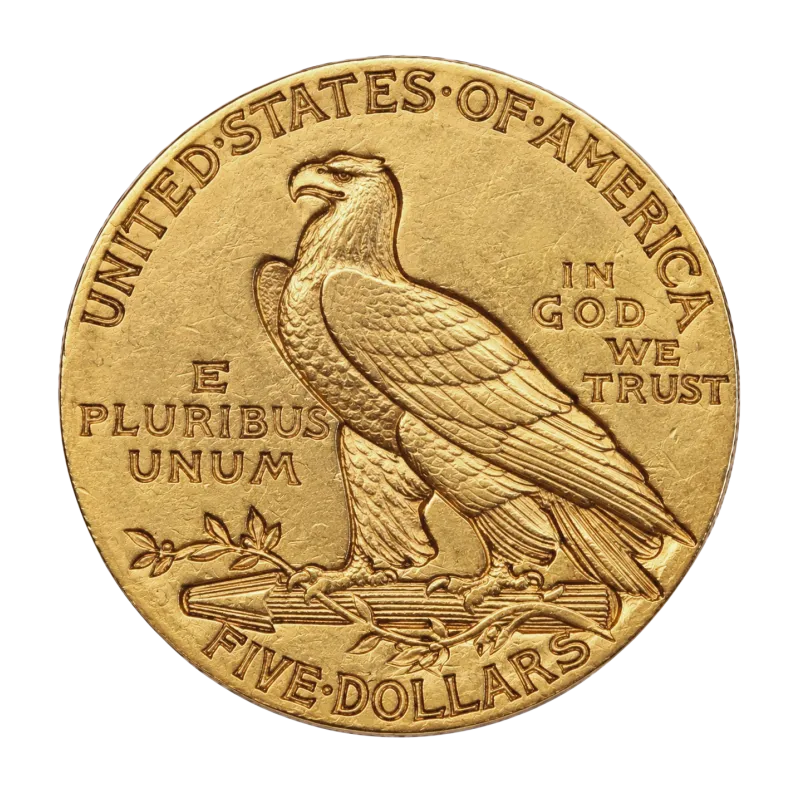
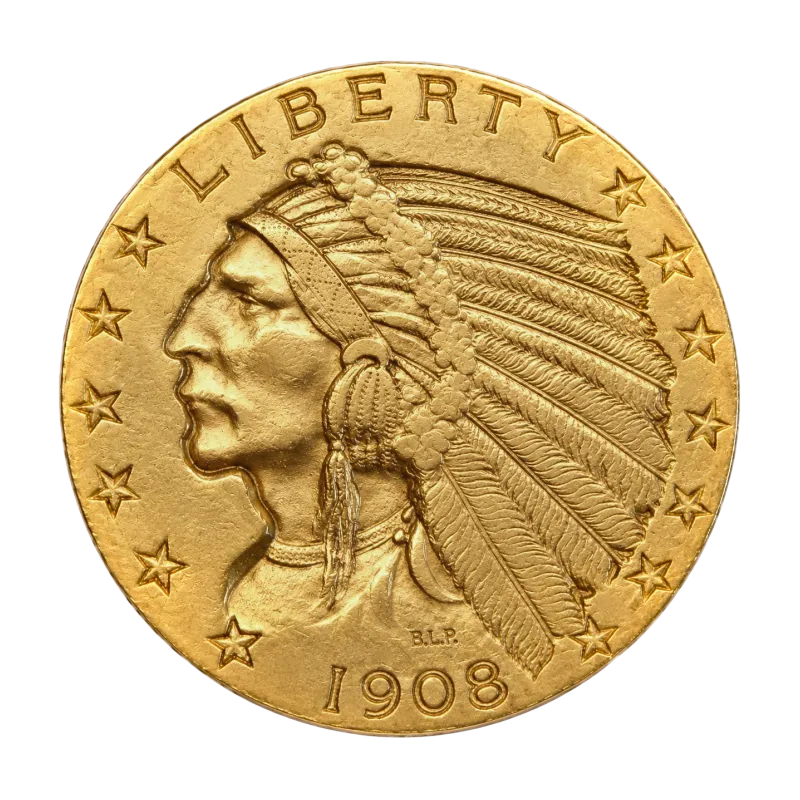
At the beginning of the 20th century, President Theodore Roosevelt sought to renew the appearance of American coinage. Inspired by the artistic achievements of antiquity, he encouraged the creation of new designs and commissioned sculptor Augustus Saint-Gaudens. This initiative marked an important development in the artistic design of American coins and would soon extend to smaller denominations, including the US $5 Indian Head Half Eagle.
The new $20 design was introduced in 1907. Created by Augustus Saint-Gaudens, it replaced the previous design and marked the beginning of a new chapter in the history of the Double Eagle. The earliest issues did not bear the motto “IN GOD WE TRUST”, which was added in 1908 following action by Congress.
The example featured on this page bears the date 1924 and belongs to the series with the motto. The Saint-Gaudens design was issued between 1907 and 1933, before the monetary upheavals of the early 1930s brought production of American $20 gold coins to an end. However, the date alone does not identify the mint at which this particular example was struck.
On the obverse, Liberty is shown standing and striding forward in a flowing gown. She raises a torch in her right hand and holds an olive branch in her left, two attributes traditionally associated with light and peace. Behind her, rays of sunlight frame the silhouette of the United States Capitol. This composition gives the figure a dynamic presence unusual in American coinage of the period.
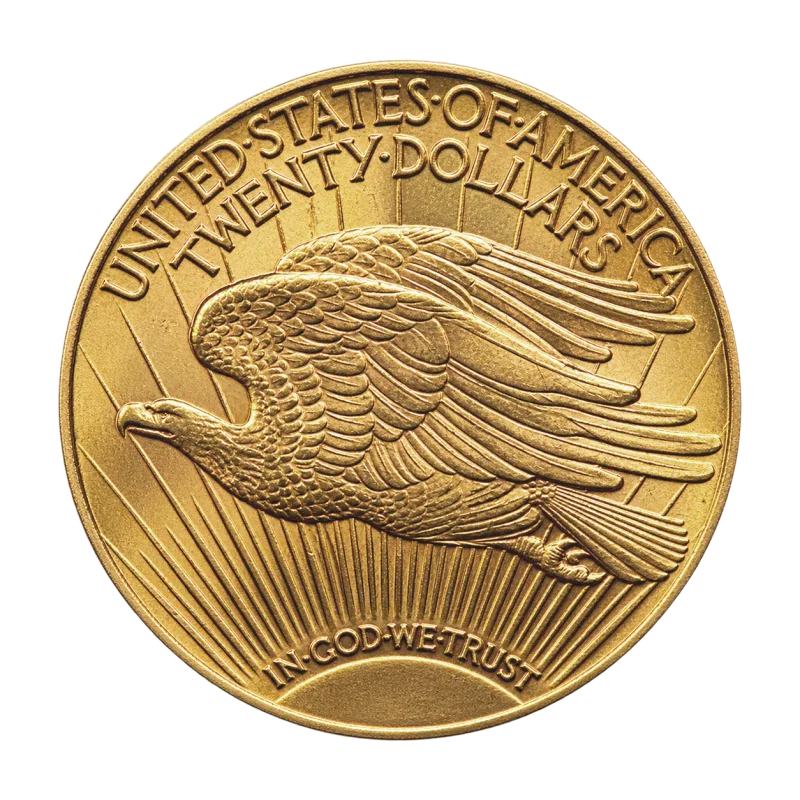
On the reverse, an eagle in flight dominates a composition of rising sunrays. Its outstretched wings and posture convey a sense of movement, unlike more conventional heraldic depictions of America’s national bird. The design occupies most of the surface and is one of the most recognisable elements of Augustus Saint-Gaudens’ work.
The inscriptions help identify the type. The obverse bears the word “LIBERTY” and the date 1924, surrounded by 48 stars representing the states of the Union at that time. The first issues of 1907 had 46 stars, before two more were added in 1912 for New Mexico and Arizona. The reverse notably bears “UNITED STATES OF AMERICA”, “TWENTY DOLLARS” and the motto “IN GOD WE TRUST”, which appears on this version of the design.
Compared with the earlier Liberty Head type, Saint-Gaudens’ design emphasises figures in motion and sculptural modelling. The influence of ancient Greek coinage can be seen in the treatment of form and the prominence given to the figures. Although the earliest 1907 versions experimented with exceptionally high relief, later regular issues, such as the coin dated 1924, feature relief adapted to routine minting.
The earliest versions of the new Double Eagle, produced in 1907, featured exceptionally high relief, which was difficult to reproduce using standard minting methods. Some required multiple strikes, severely limiting production capacity. Chief Engraver Charles Barber helped adapt the relief to allow more consistent minting. Issues intended for circulation therefore adopted a technically more practical version of the original design.
This version of the US $20 Double Eagle was produced at several United States Mint facilities, notably Philadelphia, Denver and San Francisco. Coins struck at Denver and San Francisco may bear the mintmarks “D” and “S”, respectively, while Philadelphia coins generally have no mintmark. Production years and mintages varied between facilities. Precisely identifying an example therefore requires examining its date and any mintmarks present on the coin.
The example featured here bears the date 1924 and belongs to the issues carrying the motto “IN GOD WE TRUST”. At that time, $20 gold coins retained their status as currency, but their importance extended beyond everyday payments: they also played a role in reserves and movements of precious metal. The date alone does not identify the mint of our example, and any mintmark remains to be verified from the photographs.
In 1933, amid the American banking and monetary crisis, President Franklin D. Roosevelt introduced a series of measures restricting transactions in and ownership of monetary gold, subject to certain exceptions. These decisions accompanied the disappearance of gold coins from American circulation. Double Eagles dated 1933 were indeed struck, but they were not released for ordinary circulation; most of this production was subsequently melted down. Regular production of the US $20 gold coin thus came to an end.
The US $20 Double Eagle has a theoretical weight of 33.436 grams and a diameter of approximately 34 millimetres. Struck in a gold alloy with a fineness of 900‰, it contains approximately 30.09 grams of fine gold, with the remainder of the alloy consisting mainly of copper. It is important to distinguish the coin’s total weight from its fine gold content. These figures correspond to the specifications of the type but do not, on their own, guarantee authenticity.
The example featured here belongs to the type depicting Liberty striding forward and an eagle in flight, whose designs are described in the chapter on engraving. Its large diameter and distinctive design make it visually distinguishable from many other gold coins. The date 1924, visible on the obverse, places it among the issues bearing the motto “IN GOD WE TRUST”.
The date appears on the obverse, beneath the figure of Liberty. When present, the mintmark is located above the date: “D” for Denver or “S” for San Francisco. Coins struck in Philadelphia generally have no mintmark. The available photograph does not allow us to determine with certainty whether our example has a mintmark; its mint of origin therefore remains to be established.
Identifying a US $20 Double Eagle involves examining its dimensions, weight, designs and edge together. The edge bears the raised motto “E PLURIBUS UNUM”, accompanied by thirteen stars representing the original American colonies. Precise weighing and careful examination of the relief can help detect certain anomalies, but these checks are not sufficient to establish a coin’s authenticity. In cases of doubt, a professional numismatic examination remains necessary.
The value of a US $20 Double Eagle depends largely on the quantity of gold it contains and movements in the gold price. This changes over time, leading to fluctuations in the coin’s price. There is therefore no single, permanent value applicable to every example.
The state of preservation also plays a role in assessing a US $20 Double Eagle. A coin with well-preserved relief may be valued differently from an example showing significant wear. The date and mint of origin may also influence its price, as some issues are less common than others. These characteristics must nevertheless be assessed on a case-by-case basis.
Assessing the value of a US $20 Double Eagle requires considering all its characteristics. Direct examination makes it possible, in particular, to check its condition, date and any mintmarks. An individual assessment can therefore take account of the gold price and the particular features of the coin presented, rather than relying on a general price.
Explore the collection
Other coins, other eras, one shared history of gold.
Switzerland
France
France
United Kingdom
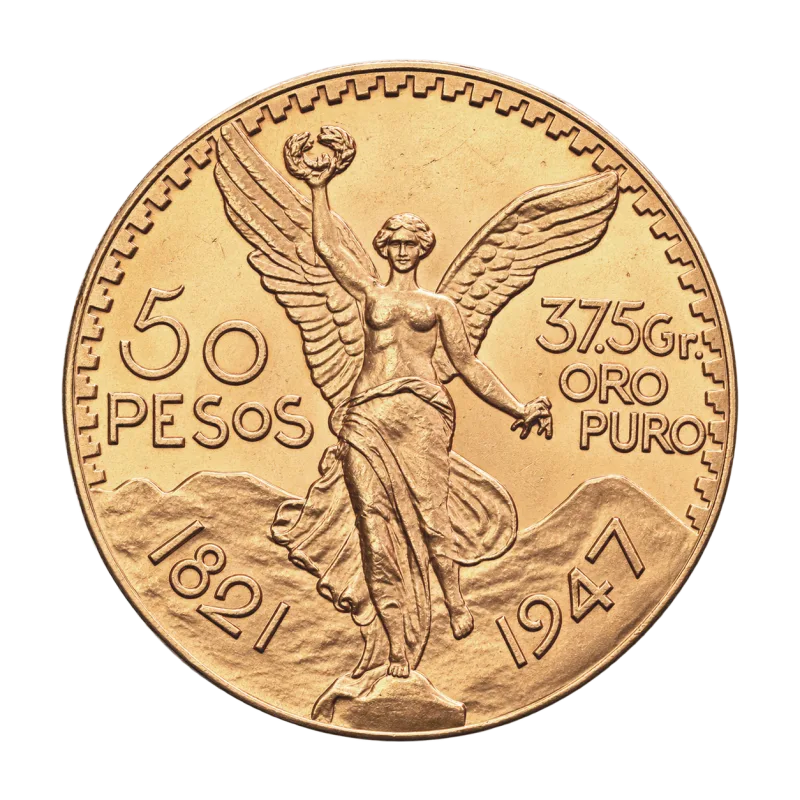
Mexico
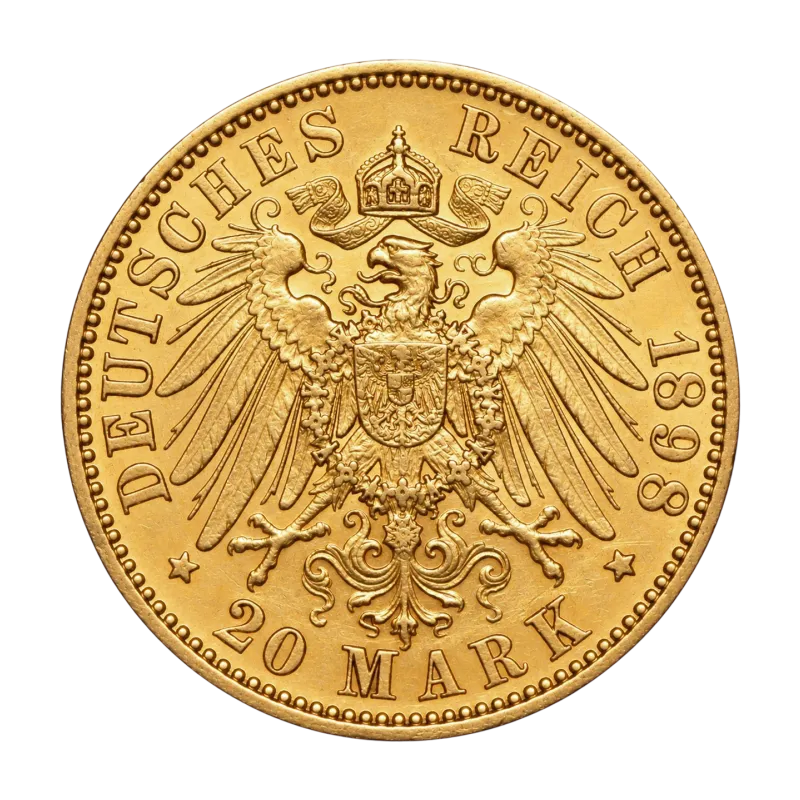
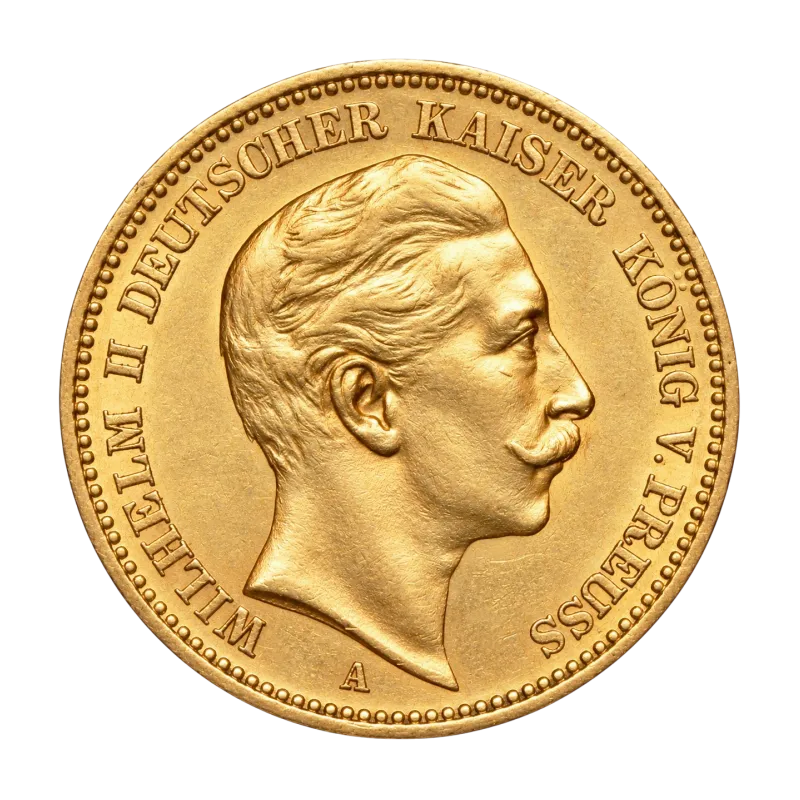
Germany
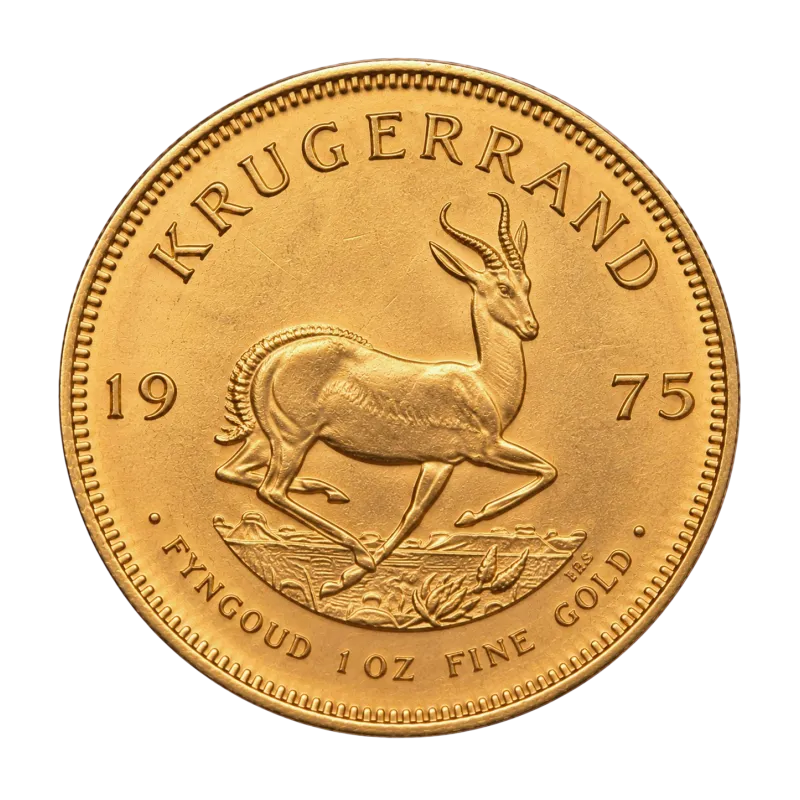
South Africa
United States
Discover all the gold coins in our numismatic collection.