
Switzerland
Bullion gold coin
France





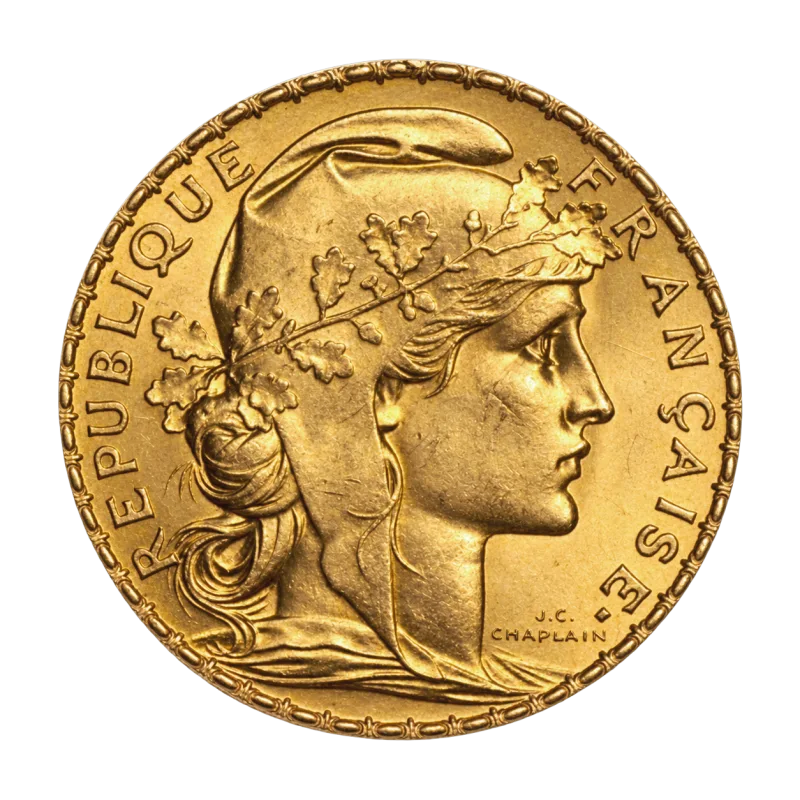
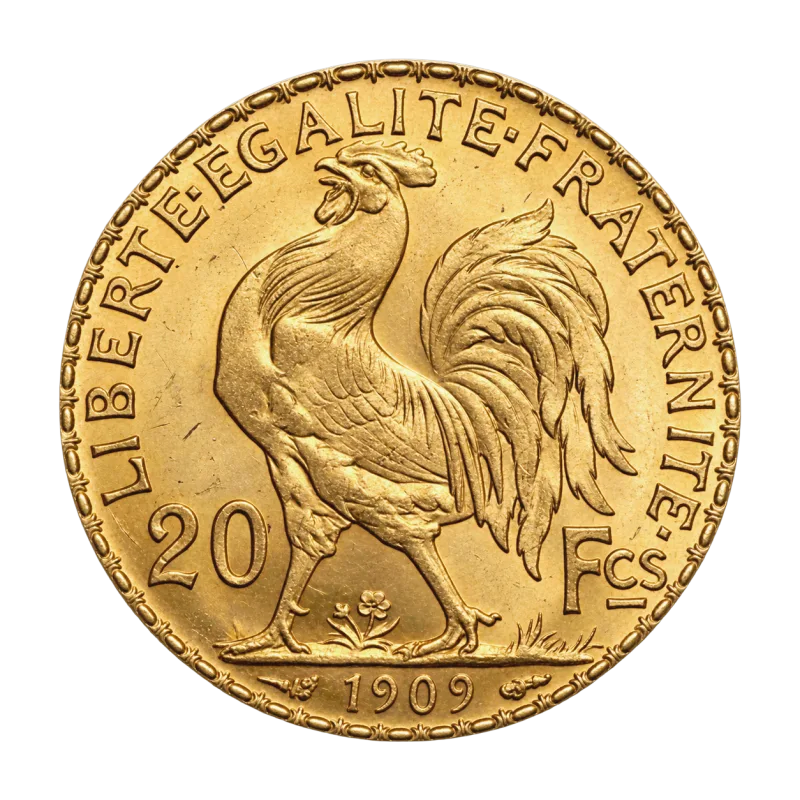
First issued in France in the late 19th and early 20th centuries, the 20 Francs Marianne Rooster is a French gold coin recognisable by the figure of Marianne on its obverse and the rooster on its reverse. Classified as an investment gold coin, it has a total weight of 6.45 g and a fineness of 900‰, giving it a fine gold content of 5.806 g.
The 20 Francs Marianne Rooster gold coin first appeared in the late 19th century, during the French Third Republic. Minted from 1899 onwards, it succeeded earlier coin designs, such as the 20 Francs Napoleon III, and firmly established republican symbols within French coinage.
Its introduction came at a time when France was asserting its republican identity through institutions, monuments and everyday objects. Coinage played a part in this representation: it now featured Marianne, the personification of the Republic, alongside the Gallic rooster, another national emblem.
Designed by engraver Jules-Clément Chaplain, the Marianne Rooster was issued until 1914. The First World War interrupted its regular production and marked the end of an era in which gold coins still played a role in the French monetary system.
Its history did not end there: further coins were restruck between 1951 and 1960, bearing dates from earlier issues. This second period of production helps explain why so many Marianne Rooster coins survive today in excellent condition.
More than a century after its introduction, the 20 Francs Marianne Rooster remains a testament to France’s political, artistic and monetary history.
The 20 Francs Marianne Rooster brings together two major symbols of French identity. Created by Jules-Clément Chaplain, its design combines the allegorical portrait of the Republic with the image of the Gallic rooster, in a composition where every detail contributes to the coin’s identity.
On the obverse, Marianne is shown in profile, facing right. She wears the Phrygian cap, a symbol of liberty, decorated with an oak branch bearing leaves and acorns. The inscription “RÉPUBLIQUE FRANÇAISE” surrounds her portrait, while Chaplain’s signature (J.C. CHAPLAIN) is engraved near the neck, in the lower part of the field. The treatment of the portrait and its decorative elements demonstrates the engraver’s fine craftsmanship.
On the reverse, an upright rooster facing left occupies the centre of the design. Traditionally associated with France, it symbolises, among other things, vigilance and national pride. The denomination “20 Fcs” appears on either side, while the motto “LIBERTÉ ÉGALITÉ FRATERNITÉ” follows the coin’s circumference. The date appears beneath the ground line, which is embellished with small botanical details.
The edge also bears a raised inscription. Depending on the period of issue, it reads either “DIEU PROTÈGE LA FRANCE” or “LIBERTÉ ÉGALITÉ FRATERNITÉ”. These inscriptions correspond to different periods of issue. Their respective dates and distinguishing features are examined in the chapter on minting.
The 20 Francs Marianne Rooster was minted in two types, distinguished by their edge inscriptions. Coins dated 1899 to 1906 bear the inscription “DIEU PROTÈGE LA FRANCE”, while those dated 1907 to 1914 bear “LIBERTÉ ÉGALITÉ FRATERNITÉ”. This distinction relates to the date inscribed on the coin rather than its actual year of manufacture: the official restrikes discussed below retain the edge inscription corresponding to the date they bear.
The outbreak of the First World War interrupted regular minting, and no coins were issued bearing dates from 1915 to 1920. The 1914 issue alone accounts for 6,720,141 coins, but not all were manufactured that year: 202,359 were struck only in 1921 to fulfil an order placed before the war. The date engraved on a coin therefore does not always correspond to its actual year of manufacture. These coins completed a pre-war order and are distinct from the Pinay restrikes produced several decades later.
A quite separate operation followed, unrelated to the 1914 order: between 1951 and 1960, approximately 37.5 million additional coins were struck bearing earlier dates from 1907 to 1914. Known as the Pinay restrikes, these coins help explain why so many examples survive today in excellent condition. The criteria used to distinguish them from original strikes are discussed in the chapter on specifications and identification.
The physical specifications of the 20 Francs Marianne Rooster, already shown alongside this description, remain consistent throughout the series, regardless of date or type. This uniformity provides an initial point of reference when examining a coin.
On coins dated from 1902 to 1914, the reverse bears two small engraved marks, known as privy marks, positioned on either side of the date: a torch on the left, the mark of Henri-Auguste Patey, the Chief Engraver then in office, and a cornucopia on the right, the mark of the Paris Mint. These marks identify those responsible for minting the coin, but their presence alone is not sufficient to guarantee authenticity.
The edge inscription, discussed in the preceding chapter, provides a second point of reference: it helps identify which of the two types a coin belongs to, according to its period of issue.
Distinguishing an original strike from a later restrike is not always possible with the naked eye. Certain characteristics, such as the colour of the gold or the appearance of the surface, may help guide an examination, but none provides sufficient proof on its own. Determining the actual period of manufacture may require a detailed numismatic assessment.
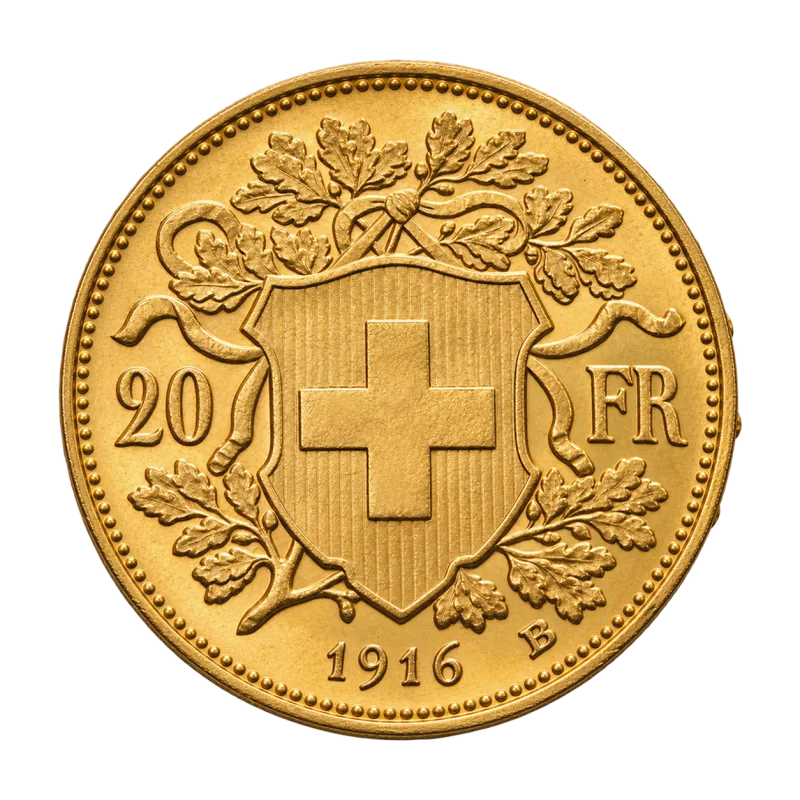
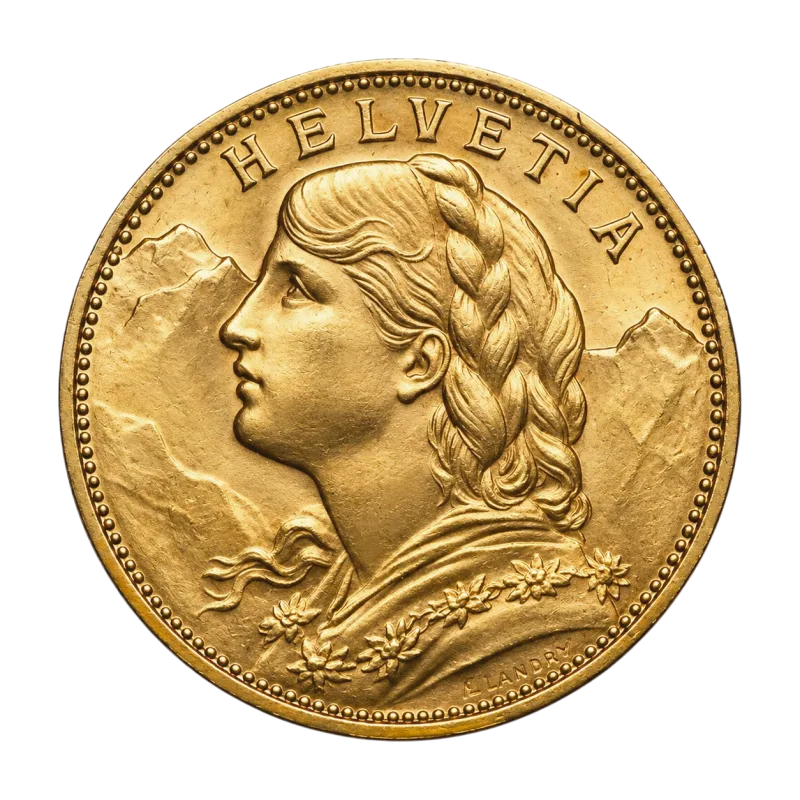
The fine gold content of the 20 Francs Marianne Rooster, already indicated in the specifications alongside this description, can be used to calculate its intrinsic value: the value of the precious metal it contains, determined by its fine gold weight and the prevailing gold price. This value fluctuates with the gold market and therefore does not correspond to a fixed amount. The same standard of weight and fineness also applies to the 20 Swiss Francs Vreneli, minted to the same specifications under the Latin Monetary Union.
For an investment gold coin such as the 20 Francs Marianne Rooster, a reference quotation provides a benchmark for assessing its market value. It changes notably with the gold price and conditions of supply and demand. The price actually offered when buying or selling may differ, depending on the terms of the transaction and the characteristics of the individual coin.
Beyond the value of its gold content, a coin may also have numismatic value. Its state of preservation, actual rarity, date and level of collector interest can all influence that value. However, the known restrikes within this series mean that dates must be interpreted with care, as they do not always reflect the true rarity of an individual coin.
For an investment gold coin, packaging is an important consideration when buying and reselling. When kept in a sealed protective pouch supplied by a professional dealer, the coin is protected from handling that could affect its condition. Retaining this packaging and its accompanying identification information helps maintain the coin’s traceability during a future transaction. Both the coin’s state of preservation and the integrity of its seal are taken into account when assessing its value.
Explore the collection
Other coins, other eras, one shared history of gold.
Switzerland
France
United Kingdom
Mexico
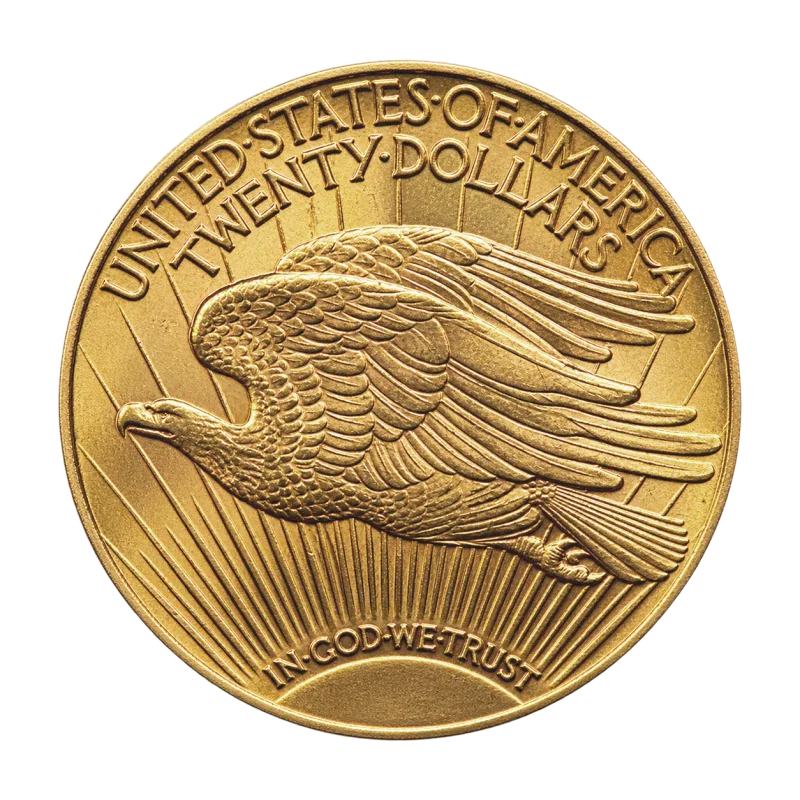
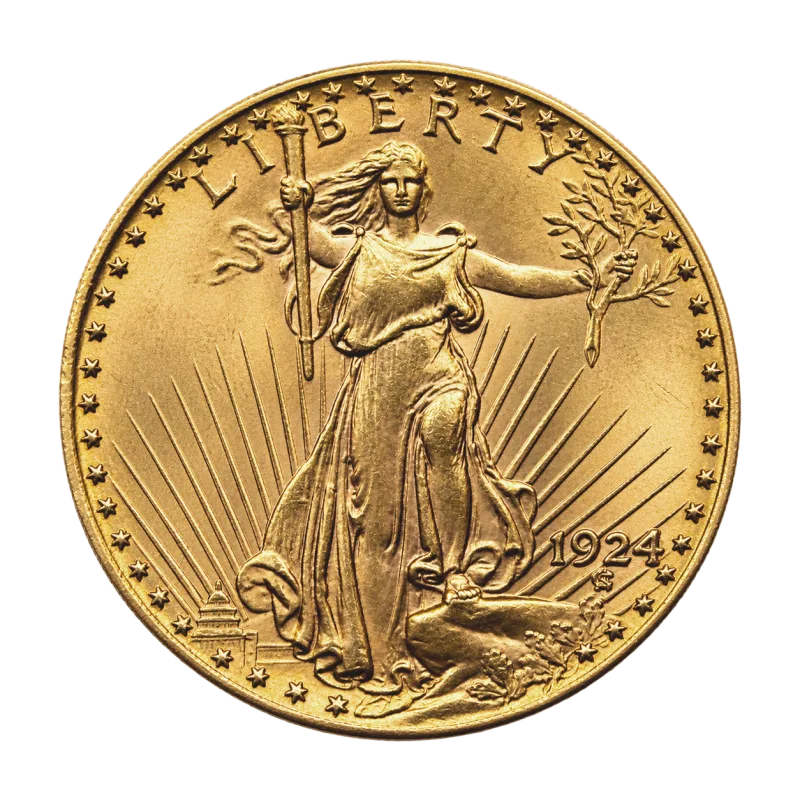
United States
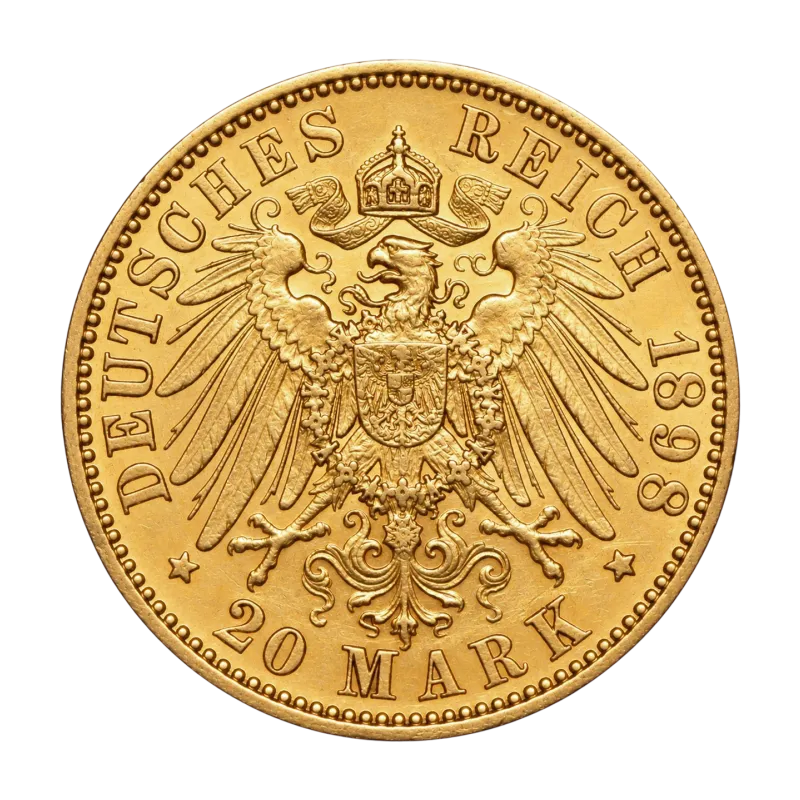
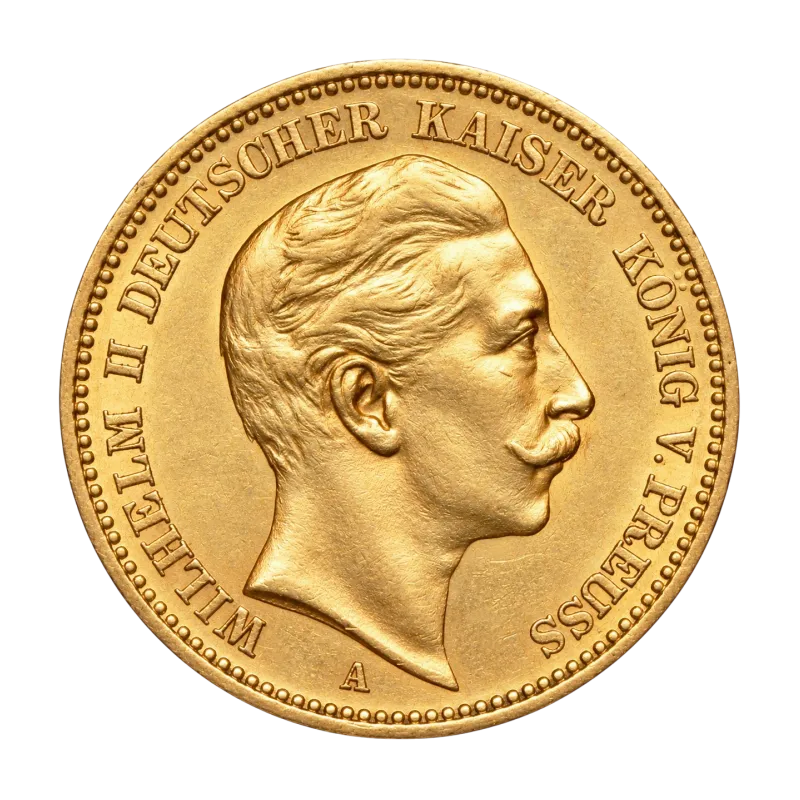
Germany
South Africa
United States
Discover all the gold coins in our numismatic collection.