
France
Bullion gold coin
Mexico





The 50 Mexican Pesos gold coin, also known as the Centenario, was first issued in 1921 to commemorate the centenary of Mexico’s independence. Recognisable by its depiction of Winged Victory against the backdrop of the Popocatépetl and Iztaccíhuatl volcanoes, it contains 37.5 grams of fine gold and has a total weight of approximately 41.67 grams. Its history includes original issues and official restrikes, notably those bearing the date 1947. The example featured on this page bears that date, although the date alone does not establish the year in which it was actually minted. With its imposing size and substantial gold content, the Centenario occupies a distinctive place among investment gold coins.
The history of the Centenario begins with Mexico’s independence. The independence movement began in 1810 and culminated in 1821, when the country gained independence from Spanish rule. A century later, this date became the starting point for a coin issue intended to celebrate this major event in the nation’s history.
In 1921, Mexico introduced the 50-peso gold coin, known as the Centenario, to commemorate one hundred years of independence. Its large size and gold composition made it a particularly notable issue. The coin thus combined a monetary denomination with a commemorative purpose, expressed through the dates and symbols depicted on its two faces.
Throughout the 20th century, the 50 Pesos coin underwent several periods of production. Some issues correspond to the years shown on the coins, while official restrikes were produced later bearing an earlier date. This practice notably applies to the date 1947, which appears on many examples without necessarily corresponding to the year in which they were actually minted.
Since its introduction, the Centenario has therefore spanned several eras, from the first issues of the 1920s to restrikes produced decades later. The example dated 1947 featured on this page reflects this long history of Mexican coinage.
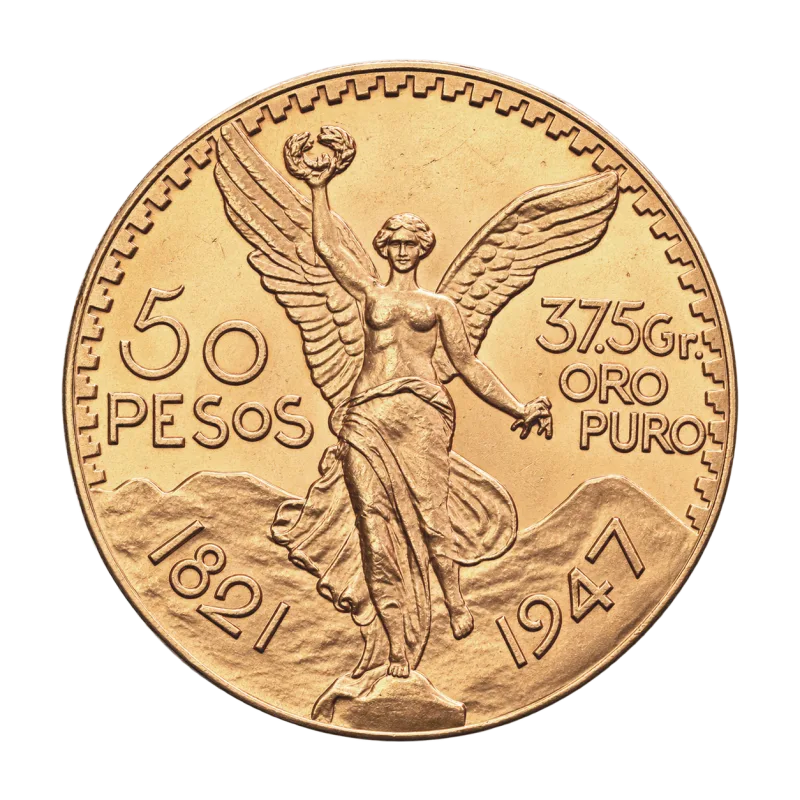
The Centenario’s most iconic design is that of Winged Victory, inspired by the statue atop the Independence Column in Mexico City. Holding a laurel wreath and a broken chain, she symbolises victory and the freedom won by Mexico following its struggle for independence.
In the background are the Popocatépetl and Iztaccíhuatl volcanoes, two peaks closely associated with the country’s landscape and traditions. Their presence places the scene within an immediately recognisable geographical setting and reinforces the national significance of this commemorative coin.
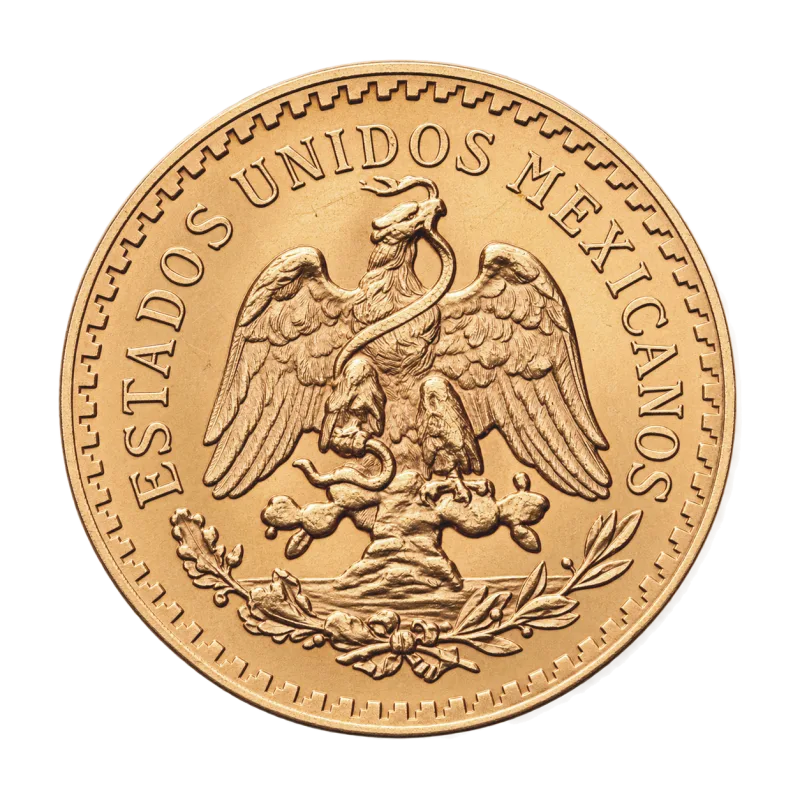
The other face features Mexico’s national coat of arms: an eagle holding a snake in its beak while perched on a cactus. This design refers to the founding legend of Tenochtitlan, the former Aztec capital on whose site Mexico City developed.
The inscription ESTADOS UNIDOS MEXICANOS, arranged around the coat of arms, gives the country’s official name, the United Mexican States. It emphasises the coin’s national identity and complements the message of independence conveyed by Winged Victory.
The dates 1821 and 1947 appearing on the Winged Victory side serve different purposes. The first commemorates the year of Mexico’s independence; the second is the date inscribed on the example featured here. As with other Centenarios dated 1947, this date alone cannot establish the actual year of minting.
The inscription 37.5 Gr. ORO PURO indicates the amount of fine gold contained in the coin: 37.5 grams. On the edge, the motto INDEPENDENCIA Y LIBERTAD extends the coin’s symbolic message by directly linking its design to the ideals of Mexican independence.
The minting of the 50 Mexican Pesos gold coin was entrusted to the Casa de Moneda de México, the institution responsible for producing the country’s coinage. Officially issued in 1921 as legal tender, the coin was designed to commemorate the centenary of Mexican independence.
Production of this coin did not continue without interruption. According to Banco de México, minting was suspended in 1931 before resuming in 1943, against a background of growing demand for gold coins. This resumption marked a new stage in the Centenario’s production history.
The history of its manufacture is therefore not simply a sequence of dates, each corresponding to a particular year of minting. With later issues and official restrikes, the date inscribed on a coin does not always establish precisely when it was produced.
Following the resumption of production, several series of official restrikes were issued over the following decades. These include many examples bearing the date 1947, which does not necessarily correspond to their actual year of manufacture. These issues notably responded to demand for gold coins intended for investment.
Originally designed as legal tender, the 50 Mexican Pesos gold coin also became established as an investment coin, sought after for its gold content and numismatic interest. Its original monetary status must therefore be distinguished from its role in today’s gold market.
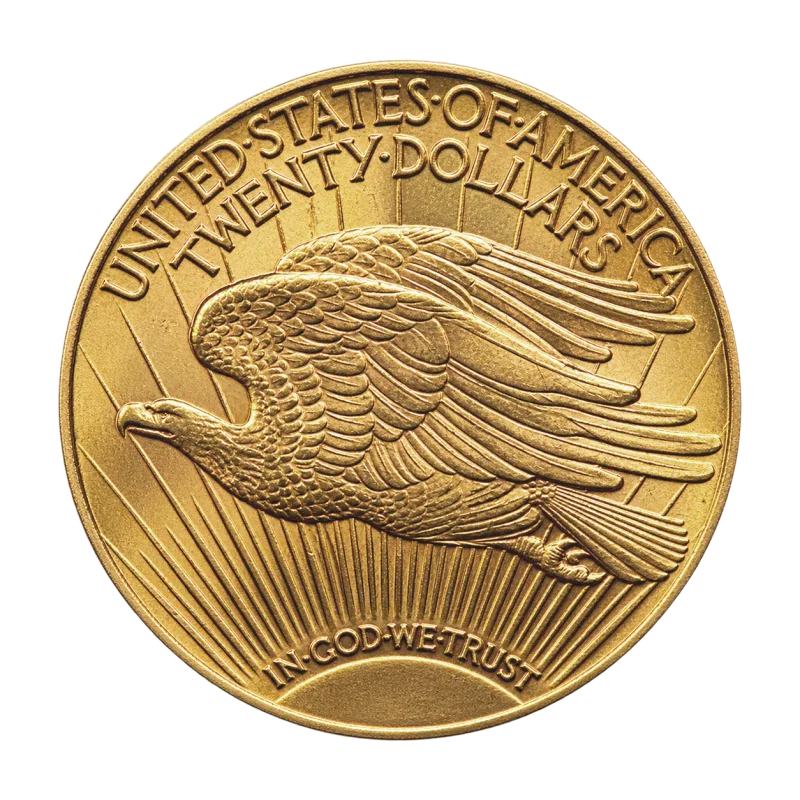
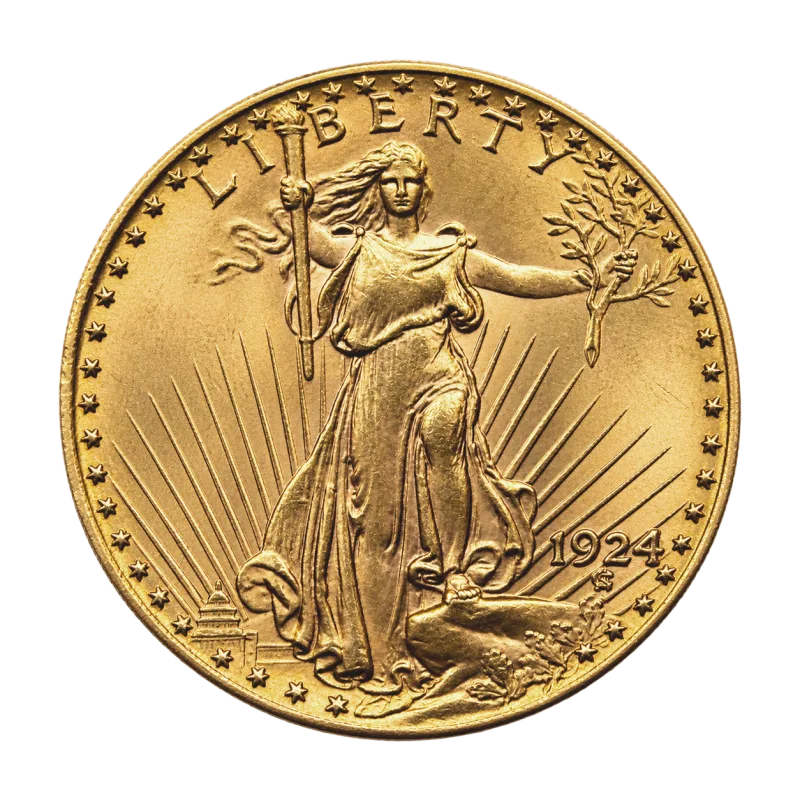
With a diameter of 37 mm and a total weight of approximately 41.67 grams, the 50 Mexican Pesos gold coin stands out for its large size. These dimensions provide useful reference points for distinguishing the Centenario from other gold coins. By comparison, the US $20 Double Eagle has a diameter of approximately 34 mm.
Struck in a gold alloy with a fineness of 900‰, it contains 37.5 grams of fine gold. Its edge bears the inscription “INDEPENDENCIA Y LIBERTAD”, a distinctive feature that complements the designs visible on both faces.
Identifying the coin type relies on a combination of features: weight, diameter, inscriptions and engraved designs. None of these criteria should be considered in isolation. Together, they help identify the coin type to which an example belongs.
The inscriptions and details of the relief should also be examined carefully. The sharpness of the lettering, the outlines of the designs and the appearance of the edge can provide useful clues when comparing a coin with a reference example. However, these observations alone are insufficient to establish a coin’s authenticity.
A coin may appear to have the correct dimensions, inscriptions and designs without this being sufficient to establish its authenticity. Examining photographs or simply weighing a coin therefore cannot authenticate an example with certainty.
Before buying or selling, a more thorough assessment may be necessary. This involves appropriate checks and, in cases of doubt, examination by a professional with expertise in numismatics.
The 50 Mexican Pesos gold coin contains 37.5 grams of fine gold. Its theoretical gold value therefore depends directly on the gold price: it can be estimated by multiplying this quantity by the price per gram of fine gold at the time of calculation.
This intrinsic value provides a reference point for assessing the price of a Centenario, but it does not necessarily correspond to the amount at which an individual can buy or resell the coin. Transaction conditions may result in a difference in either direction.
Prices quoted for a 50 Mexican Pesos gold coin can vary from one dealer to another, even on the same date. They depend notably on the gold price, demand, coin availability and the conditions applied by each intermediary.
The price offered by a professional when buying or selling the coin may therefore differ from its theoretical gold value, in either direction. It is also important to distinguish between the prices at which dealers buy and sell: there is no single quoted price guaranteeing a particular transaction price.
Beyond its gold content, a Centenario’s value may be influenced by its condition, documented rarity and appeal to collectors. Certain examples may therefore trade at different prices from more common coins, even when their fine gold content is identical.
The date 1947, found on many Centenarios, is not sufficient on its own to establish an example’s rarity or its actual year of manufacture. Any assessment must take all its characteristics into account rather than relying on that date alone.
Explore the collection
Other coins, other eras, one shared history of gold.
France
Switzerland
France
United Kingdom
United States
Germany
South Africa
United States
Discover all the gold coins in our numismatic collection.