

France
Bullion gold coin
Switzerland





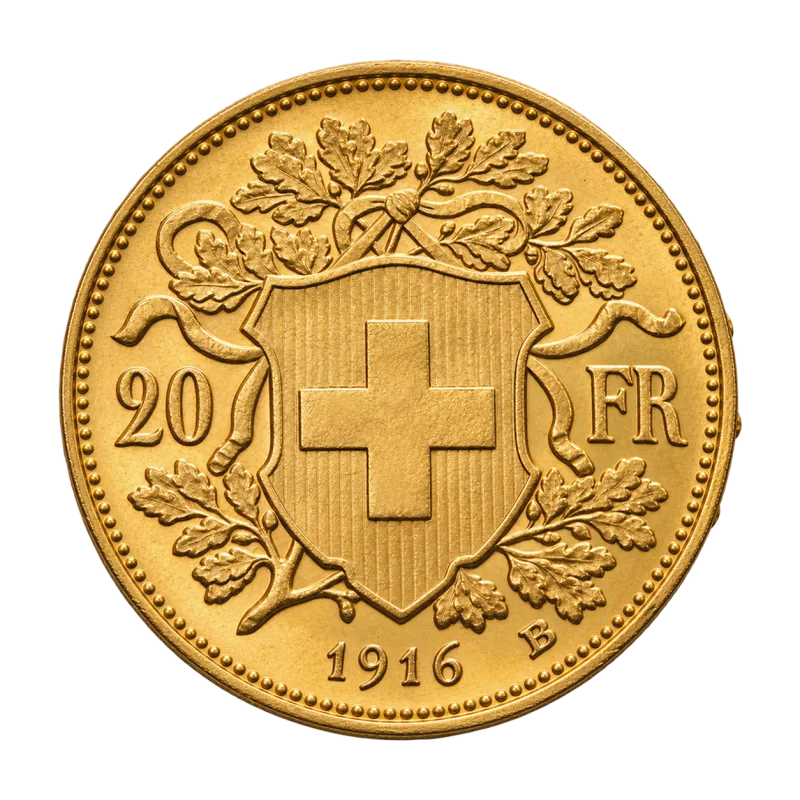
The 20 Swiss Francs Vreneli is a Swiss gold coin distinguished by its female portrait designed by Fritz Ulysse Landry. Minted in Bern, it contains 5.806 g of fine gold, with a total weight of 6.45 g and a fineness of 900‰. The example featured on this page is dated 1916. In Annecy, this coin is among the examples that can be examined to better understand the characteristics of investment gold coins, whether buying or selling.
In 1897, the Swiss Confederation introduced a new 20-franc gold coin design to replace the so-called “Libertas” coin, issued since 1883. This change formed part of Switzerland’s monetary history in the late 19th century, when gold coins still played an important role in European monetary systems.
The new design was created by Fritz Ulysse Landry, an artist and medallist from Neuchâtel, while the production of the original dies was entrusted to Parisian engraver Ernest Paulin Tasset. The female figure chosen for the coin gave it a distinctive visual identity, closely associated with Swiss imagery.
Over time, the coin acquired the affectionate nickname “Vreneli”, associated with the female figure on its obverse. The precise origin of the name and how it first spread remain difficult to establish with certainty. Nevertheless, it became firmly established in collectors’ vocabulary and Swiss numismatic tradition.
Minted in Bern, the Vreneli spans several periods of Swiss monetary history. The 1916 issue featured on this page belongs to the coins minted during the First World War, when Switzerland maintained its neutrality. Its mintage and place in the chronology of production are examined in the chapter on minting and circulation.
The Vreneli’s design brings together symbols associated with late 19th-century Switzerland across its obverse, reverse and edge. Each part of the coin connects a particular figure or motif with the identity of the Swiss Confederation.
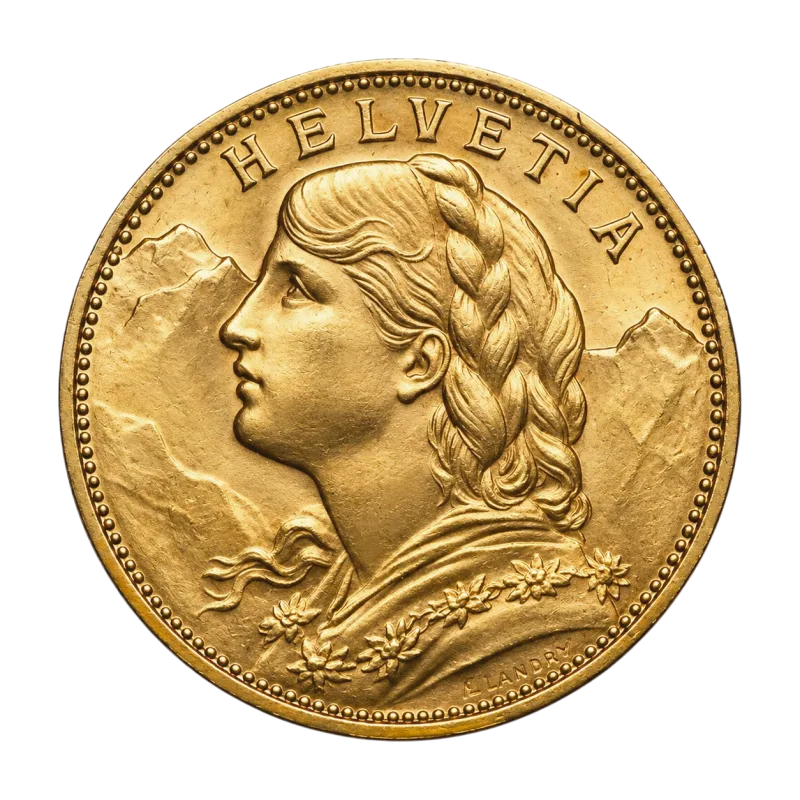
The obverse features the bust of a young woman facing left, an allegorical representation of the Swiss Confederation known as Helvetia. Her braided hair forms a crown-like arrangement, while edelweiss flowers are embroidered on her clothing, a floral motif closely associated with the Swiss Alps. The portrait stands against a background of Alpine peaks, beneath the arched inscription HELVETIA. The designer’s signature, F. LANDRY, appears incuse at the lower right of the obverse.
The reverse depicts the Swiss shield bearing the federal cross, resting on an oak branch tied with a ribbon. The denomination appears on either side of the shield, with 20 on the left and FR on the right. The date appears below, with the B mintmark to its right.
On the original Vreneli issues from 1897 to 1935, the edge bears 22 raised stars, arranged in three groups of seven, seven and eight. This number corresponds to the 22 cantons of the Swiss Confederation when the coin was introduced. Later issues have different edge characteristics, discussed in the chapter on minting and circulation.
Together, the obverse, reverse and edge form a coherent design in which the female figure, the federal coat of arms and the number of cantons each reflect Switzerland’s Alpine and confederal identity.
Between its introduction in 1897 and its final minting in 1949, the Vreneli went through several distinct periods of production, from the original series to the later post-war issues.
The Vreneli was minted in Bern between 1897 and 1935, although not continuously. Certain dates within this period do not appear in Swissmint’s official mintage table, and production volumes varied considerably from one year to another.
The 1916 issue belongs to this original series. According to the same table, its mintage totalled 300,000 coins, compared with 700,000 in 1913, 700,000 in 1914 and 750,000 in 1915. No 1917 or 1918 issues are listed.
After the Second World War, coins were minted between 1945 and 1947 bearing the date 1935 and the designation L 1935. The date inscribed on these coins therefore does not correspond to their actual year of manufacture, an important distinction when placing a coin within the chronology of the series.
In March 1947, the Swiss Federal Council ended this practice. Coins minted subsequently bore their actual dates, first 1947 and then 1949. Their edges differ significantly from those of the original series (1897–1935), represented here by the 1916 issue: they combine a small number of stars with the Latin inscription AD LEGEM ANNI MCMXXXI, referring to the monetary law of 1931, whereas the original series bears 22 raised stars.
Identifying a 20 Swiss Francs Vreneli depends on the consistency of several characteristics rather than any single feature. The following points can guide an initial examination but do not replace professional assessment where authenticity is uncertain.
The coin’s theoretical weight, diameter and fineness, already listed in the specifications alongside this description, provide an initial basis for comparison. A significant deviation from these values, whether in weight or diameter, is a warning sign that warrants further examination. Conversely, matching the expected specifications does not, by itself, establish authenticity: it is one indicator among others, not proof.
The date, inscriptions, relief details on the obverse and reverse, and the edge should display overall consistency, as described in the chapter on the coin’s design and symbolism. The edge must correspond to the issue type associated with the inscribed date. The original series (1897–1935), which includes the 1916 example featured here, has a different edge from later issues. The date must therefore be systematically checked against the corresponding edge characteristics. Any discrepancy warrants examination but is not, by itself, sufficient to establish that a coin is counterfeit.
An apparently correct overall appearance, a weight close to the theoretical specification or a simple photograph cannot individually guarantee a coin’s authenticity. Some counterfeits reproduce these characteristics accurately while displaying discrepancies detectable only through more detailed examination. A thorough assessment therefore combines several indicators, including careful observation and measurements taken with suitable instruments, without treating any single result as conclusive.
If there is any doubt, an assessment by a qualified professional with the necessary instruments and expertise can provide a more thorough examination and a more reliable evaluation of a coin’s authenticity.
As an investment gold coin, the 20 Swiss Francs Vreneli is valued primarily for the amount of fine gold it contains. Understanding the factors that determine its value can help buyers and sellers approach a transaction with greater confidence.
The intrinsic gold value of a Vreneli is based on its fine gold content, approximately 5.806 g, as already stated in the specifications on this page. This metal value is calculated by multiplying that weight by the market price per gram of fine gold at the relevant time. It therefore fluctuates with the gold price and does not represent a fixed amount.
The 20 Swiss Francs Vreneli shares its principal metallic specifications with French 20-franc gold coins, notably the 20 Francs Marianne Rooster and 20 Francs Napoleon: a weight of approximately 6.45 g, a fineness of 900‰ and nearly 5.81 g of fine gold. Derived from the standards of the Latin Monetary Union, this shared format helped establish these coins as historical benchmarks in the investment gold market.
The quoted price of the 20 Swiss Francs Vreneli changes notably in response to movements in the gold price. It provides a reference price in the investment gold coin market but does not necessarily correspond to the price actually agreed upon in a transaction.
In the investment gold coin market, the retail purchase price is the amount at which a professional dealer offers to sell a Vreneli to a private customer, while the dealer buyback price is the amount the same dealer offers to pay when purchasing a coin from a private owner. These prices are not necessarily identical and may vary between dealers and over time according to market conditions. Both differ from the quoted price mentioned above, which remains an indicative benchmark rather than a guaranteed transaction price.
When a transaction takes place, the coin’s authenticity and state of preservation are among the factors that should be checked. These checks help make buying or selling more secure, regardless of any particular numismatic interest.
Explore the collection
Other coins, other eras, one shared history of gold.
France
France
United Kingdom
Mexico
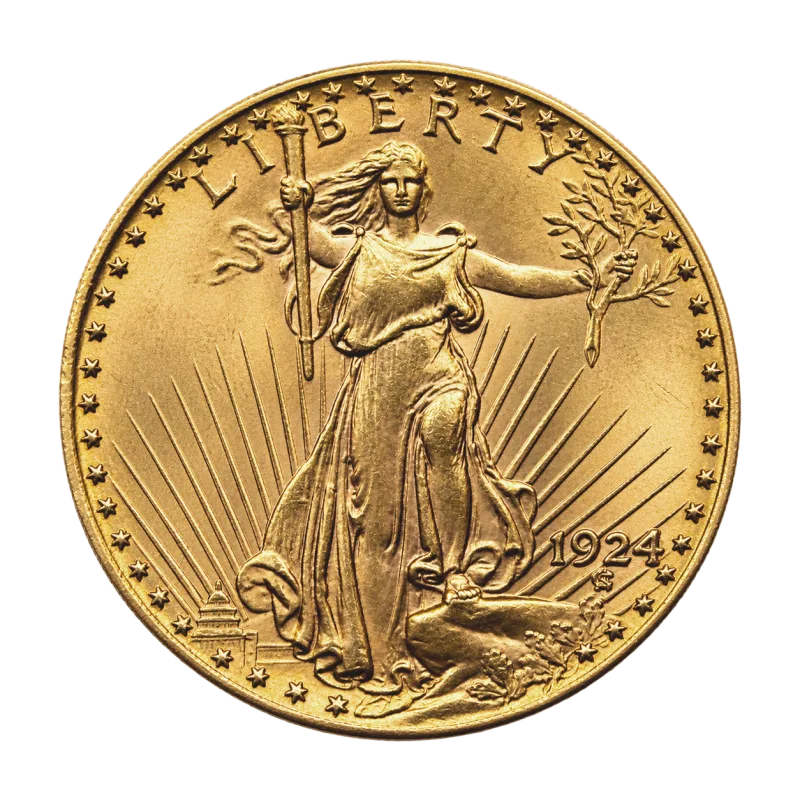
United States
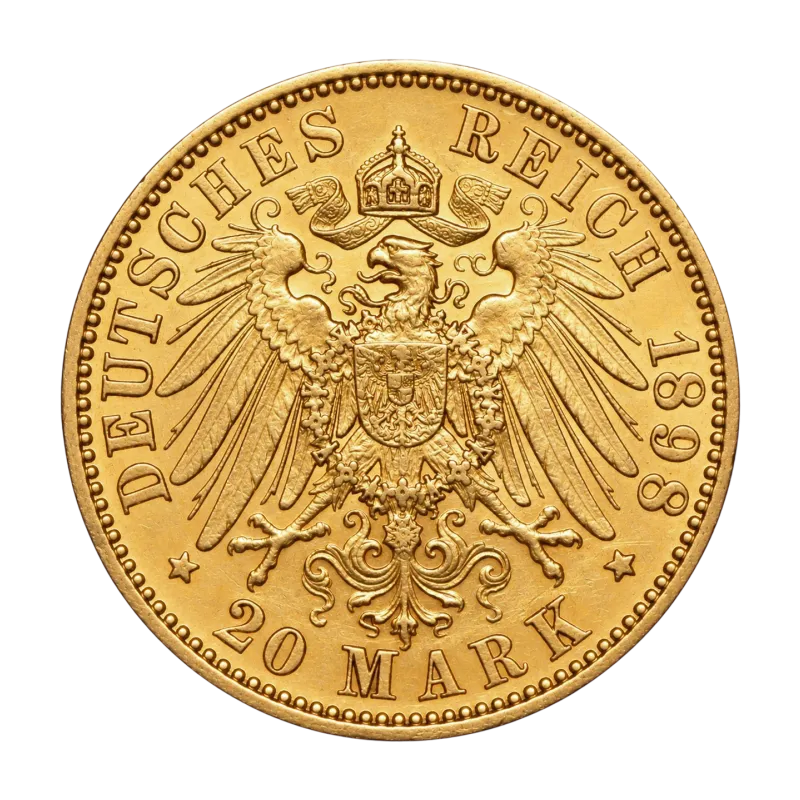
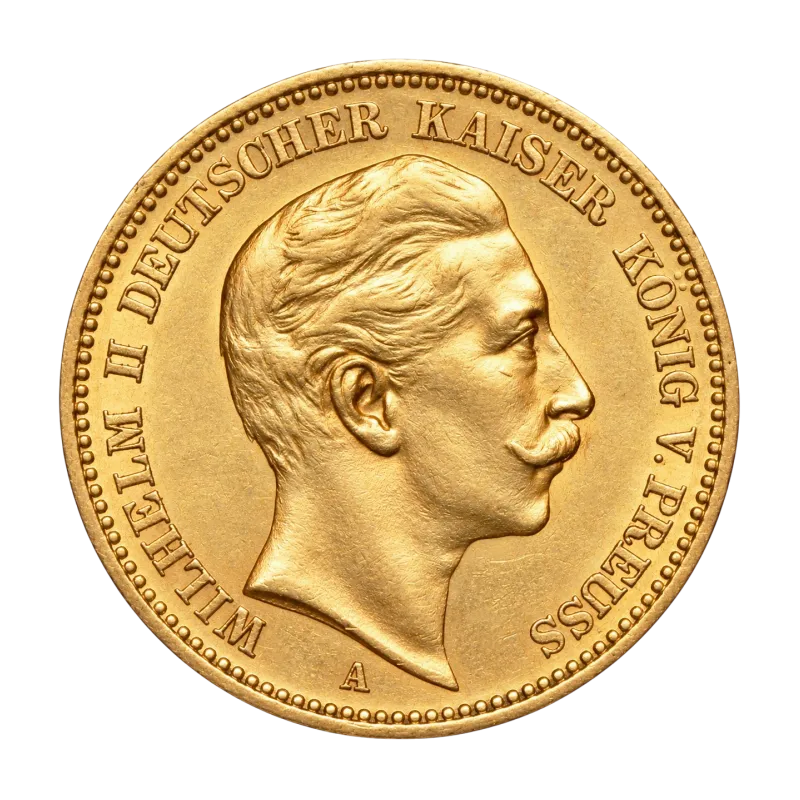
Germany
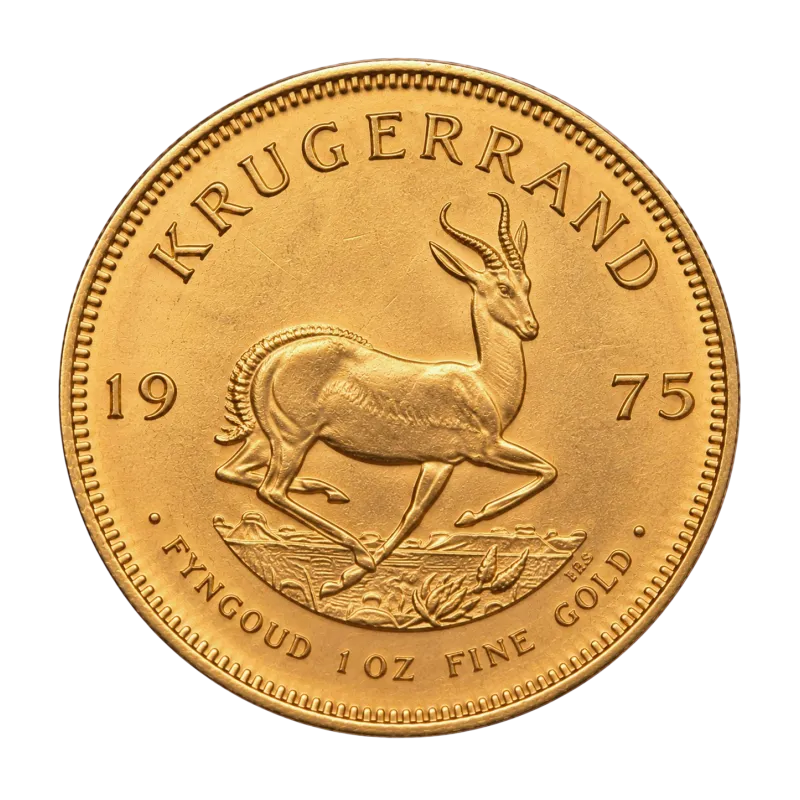
South Africa
United States
Discover all the gold coins in our numismatic collection.