


France
Bullion gold coin
France





The 20 Francs Napoleon III is a French gold coin minted during the Second French Empire, from 1853 to 1870. It is distinguished by two main portraits of the emperor: the bare head, followed by the laureate head, introduced in 1861. The 1864 example featured here belongs to the latter type. With a total weight of 6.45 g, a fineness of 900‰ and a fine gold content of 5.806 g, this coin shares the same metallic specifications as other French 20-franc gold coins of the same standard. Today, it is sought after both for its history and for its place among investment gold coins.
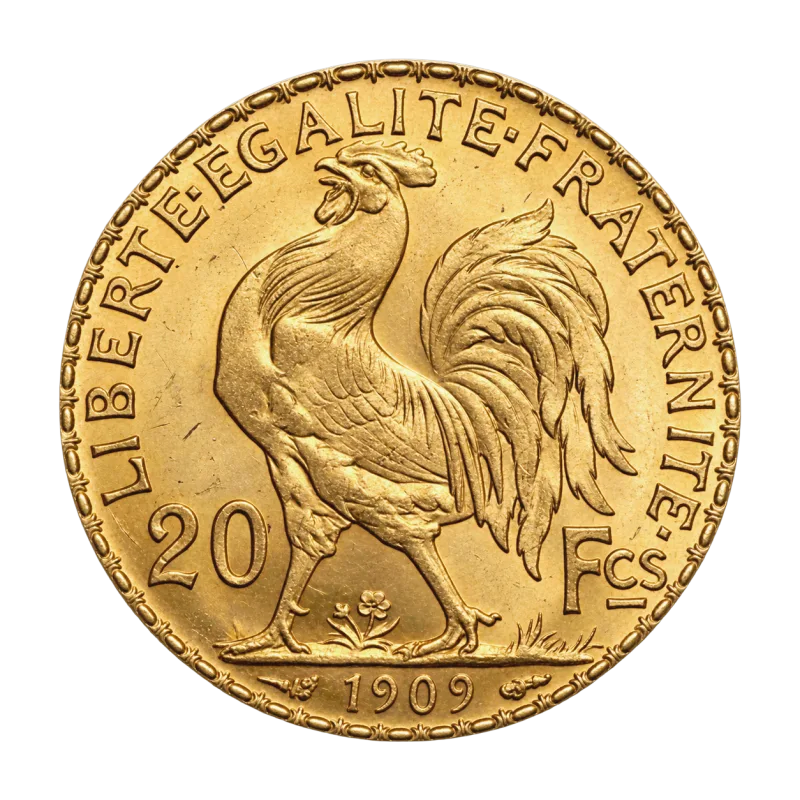
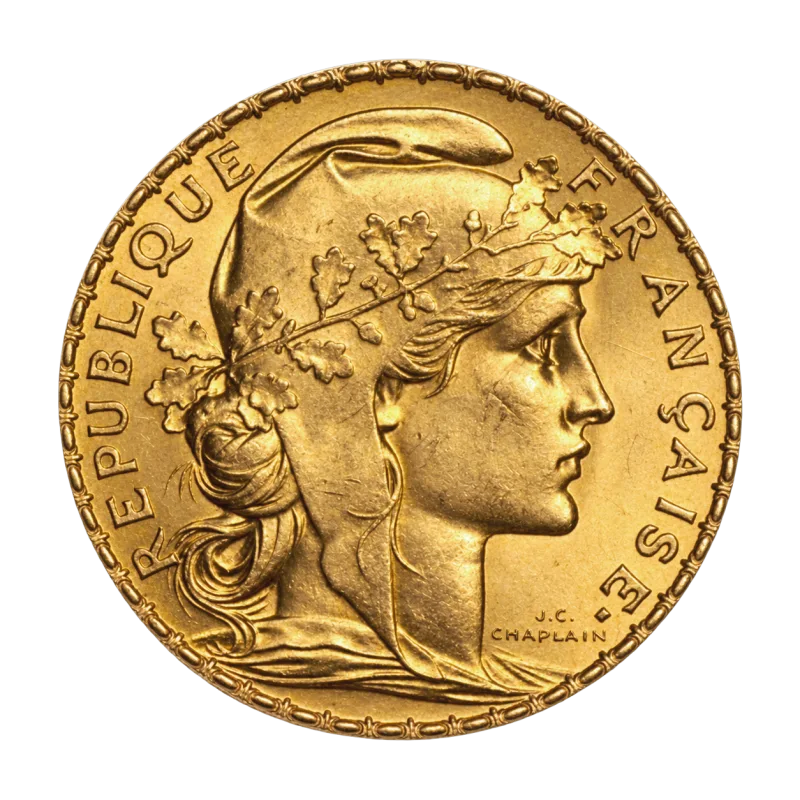
During the Second French Empire, the 20 Francs Napoleon III gold coin formed part of France’s circulating currency. First issued in 1853, it continued the tradition of 20-franc gold coins established in the early 19th century. The emperor’s portrait evolved during his reign, giving rise to two distinct types. Other French 20-franc gold coins, such as the 20 Francs Marianne Rooster, would later carry on this monetary tradition.
From 1853 to 1860, Napoleon III was depicted bareheaded, without any head ornament, in a design engraved by Jean-Jacques Barre. This first portrait accompanied the early years of the Second French Empire.
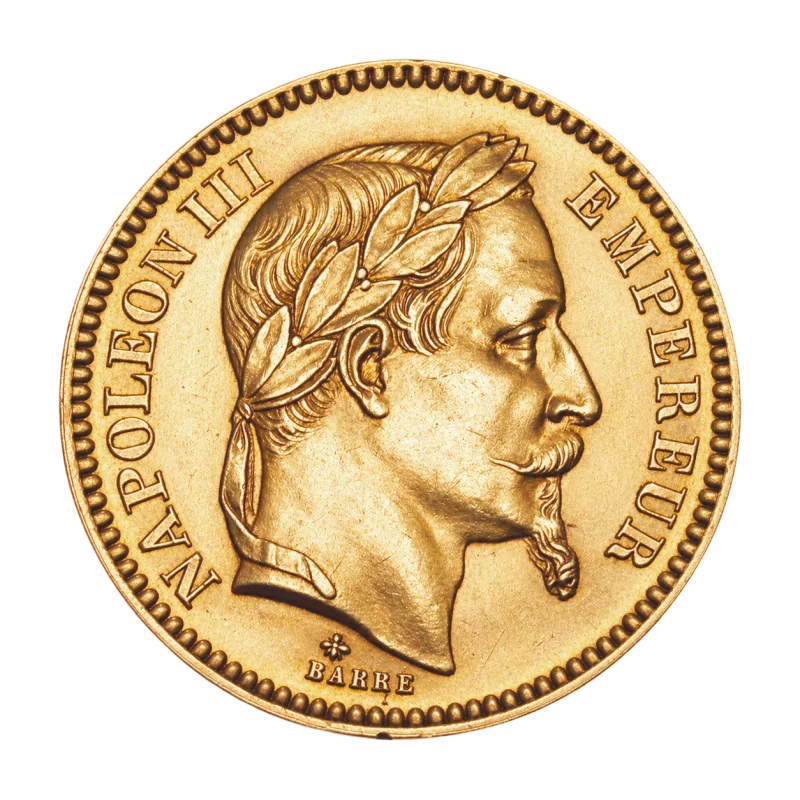
From 1861 onwards, a new portrait replaced it: the emperor now wore a laurel wreath, in a design engraved by Albert-Désiré Barre, son of the previous engraver. This change gave its name to the laureate head type, which directly succeeded the bare head type without altering the coin’s overall format.
In everyday usage, the term “Napoleon” may also refer more broadly to various French 20-franc gold coins, beyond those bearing the portrait of Napoleon III. This general designation should not be confused with the Napoleon III coin type itself, which is the subject of this page. The example featured here, dated 1864, belongs to the laureate head type; it illustrates this page without representing all the dates and variations of the series, which are examined in the following chapters.
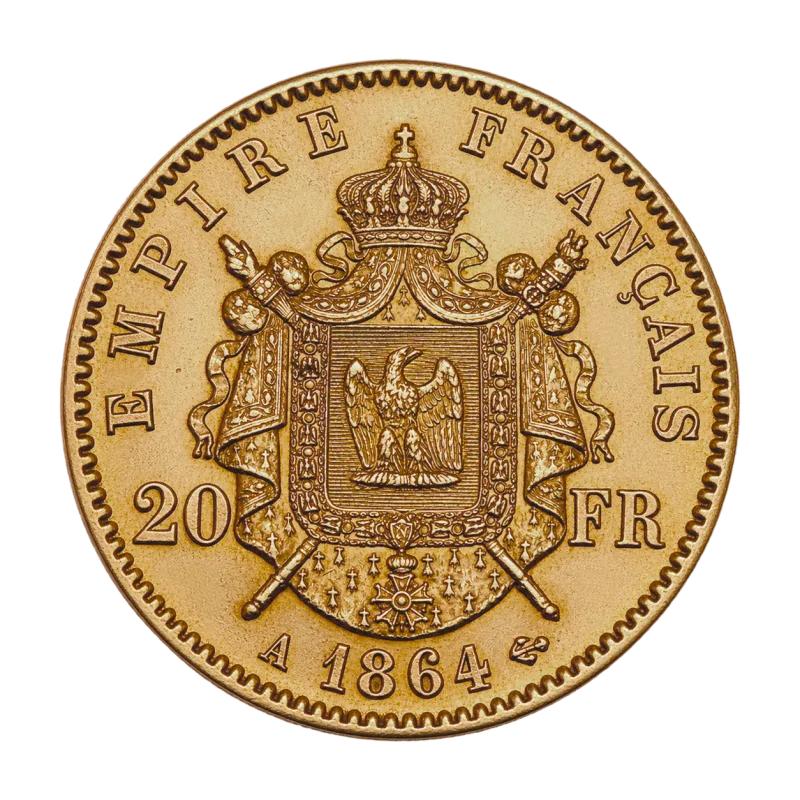
The 20 Francs Napoleon III features two distinct designs, corresponding to the bare head and laureate head types. Although both coins show the emperor facing right, their reverses differ considerably, reflecting changes in imperial iconography.
On the first type, Napoleon III appears without a wreath, surrounded by the inscription “NAPOLÉON III EMPEREUR”. On the reverse, the denomination “20 FRANCS” appears on two lines within a laurel wreath tied at its base. The inscription “EMPIRE FRANÇAIS” surrounds the design, while the date and mintmark complete the composition.
On the second type, the emperor’s portrait is adorned with a laurel wreath, a traditional symbol of victory and authority. The reverse features a more elaborate design: the denomination “20 FR” appears on either side of a shield bearing the imperial eagle, surrounded by the collar of the Legion of Honour and resting on a crowned mantle. The sceptre and the Hand of Justice recall the symbols of sovereign power.
Both types bear the raised edge inscription “DIEU PROTÈGE LA FRANCE”. This is a feature shared by these issues despite the significant differences between their engraved designs. Together, the motifs associate the coin’s monetary value with the representation of imperial authority.
The 20 Francs Napoleon III was minted in two successive types: the bare head from 1853 to 1860, followed by the laureate head from 1861 to 1870. The Paris Mint (mark A) and Strasbourg Mint (mark BB) were among the principal production centres for these coins. Dates and mintmarks help place individual examples within this period of production.
Originally, these gold coins were issued for circulation as currency, alongside silver coins and banknotes. Their face value of 20 francs, substantial at the time, made them more suitable for larger payments, savings and certain commercial transactions than for small everyday purchases.
As the monetary system evolved, these coins gradually ceased to function as circulating currency. Today, they are primarily sought after for their gold content and their place among investment gold coins. However, their present-day availability cannot be inferred directly from the quantities minted during the Second French Empire: some coins may have disappeared from circulation, been melted down or been preserved over time.
The theoretical weight, fineness and diameter of this coin, listed in its specifications, are identical for the bare head and laureate head types. Both share the same metallic standard inherited from 19th-century French monetary legislation. The same standard of weight and fineness is also found in the 20 Swiss Francs Vreneli, despite differences in design and identifying features. This consistency provides an initial point of reference: a significant deviation from these values, whether in weight or diameter, is a warning sign that warrants further examination.
The simplest visual distinction is the emperor’s head: bare on the first type and adorned with a laurel wreath on the second. This observation alone is sufficient to identify which of the two types a coin belongs to, without repeating the details of their reverses already covered in the chapter on engraving. The date and mintmark, engraved on the reverse, then help place each example more precisely within its period of issue. The coin photographed on this page is a laureate head dated 1864; it represents just one example among the various dates and mints associated with the two types.
The edge, bearing the inscription “DIEU PROTÈGE LA FRANCE” on both types, provides another identifying feature. None of these elements — weight, diameter, general appearance or inscriptions — constitutes proof of authenticity when considered in isolation. Each is only one indicator to be assessed alongside other observations. If there is any doubt, an examination by a qualified professional is recommended to assess the authenticity of a coin more reliably.
The value of a 20 Francs Napoleon III is based primarily on the amount of fine gold it contains, which is identical for the bare head and laureate head types. The value of the gold contained in the coin is calculated using its fine gold weight and the gold price at the time of assessment. It therefore varies with market fluctuations and does not represent a fixed quoted price for the coin.
The price charged when buying a 20 Francs Napoleon III may differ from the amount offered when selling it. These prices depend notably on the gold price, market conditions and the practices of individual dealers. The difference between the coin’s gold value and its transaction price may therefore vary according to circumstances, without either the bare head or laureate head type necessarily commanding a higher price.
Today, 20 Francs Napoleon III coins are traded on the gold coin market, where their gold content remains an essential benchmark. However, certain examples may have particular numismatic interest because of their date, mint of origin or state of preservation. These characteristics can influence their price beyond the value of the gold they contain.
Explore the collection
Other coins, other eras, one shared history of gold.
France
United Kingdom
Switzerland
Mexico
United States
Germany
South Africa
United States
Discover all the gold coins in our numismatic collection.